

Links are still one of the main ranking factors Google takes into account to measure a website's authority.
And although artificial intelligence is transforming SEO, trust signals remain the foundation on which a strong brand is built. So even though we know link building has to be high quality, the temptation to create unnatural links is still there.
That is why, in this article, we will look at what penalties for building unnatural links are, how to avoid them and what to do to remove them if they affect your site.
What are unnatural links?
Google considers "unnatural or artificial links" to be any low-quality or questionable backlink created with the intention of manipulating rankings in search results and that breaches Google's basic guidelines. Examples include mass link building, links with no topical context, and so on.
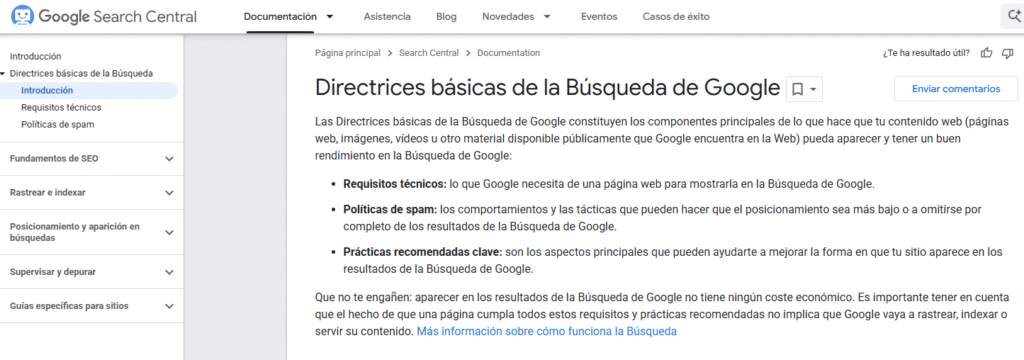
That said, the problem is not how the link was obtained, but rather how Google perceives it. That is why the key is to execute your strategy well and show that your website's link profile is natural, precisely to avoid an unnatural links penalty.
What is an unnatural links penalty?
An "unnatural links penalty" is the way Google tells you that it has found suspicious patterns in your links.
You will know because you will receive an alert in Search Console, under "Manual Actions", with the message "Unnatural links to your site".
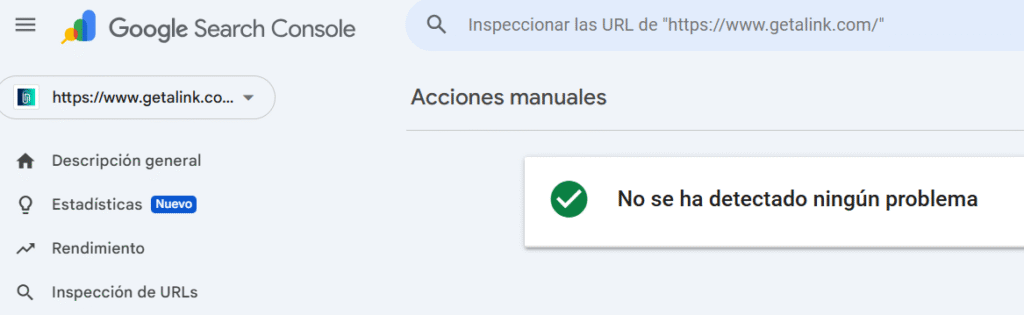
This is the starting point of a process in which you must try to remove the unnatural links.
As a result, you will lose authority, your organic traffic will plummet and your pages will lose the rankings they had; they drop to position 50-60 and beyond, in other words, they are sent to "Google hell".
How does Google detect unnatural links?
Google detects a website's unnatural links in two ways: with algorithms that look for suspicious patterns and with manual actions applied by human reviewers.
1- Algorithmic signals
Automatic filters (algorithms) look for patterns that are too obvious to be natural. For example:
- Overuse of anchor text with repeated commercial terms.
- Sudden spikes in links with no brand backing.
- Networks of sites with cloned templates, no traffic and linking to each other.
- Guest posts published on sites where the semantic context is non-existent.
2- Manual actions
These happen when a human reviewer at Google flags your domain after receiving a report or reviewing your profile. If this happens, you will know because you will receive the dreaded "Unnatural links to your site" notice in Search Console.
How to avoid unnatural links penalties
The key is for your link profile to look natural and trustworthy. These are the strategies that work best right now:
1- Work on your entity before getting links
Before publishing your first guest post or buying a link, make sure your brand is trustworthy in Google's eyes. To do so:
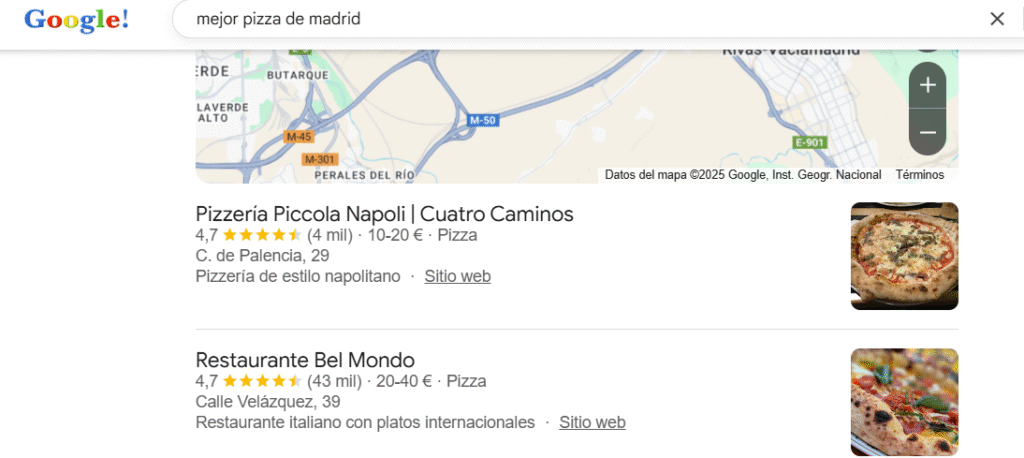
- Create and complete profiles in directories and platforms such as Google Business Profile, Yelp or Trustpilot.
- Open social media accounts (even if you don't post every day, mere presence already builds trust).
- Generate media mentions through press releases, so that these brand mentions are indexed by Google as "trusted sources".
Bear one thing in mind: for Google to interpret these signals as trustworthy, all the details in every brand mention must match across all platforms (website, name, address, phone number).
2- Use "pillow" links
Obviously, the most powerful links you get should point to key pages, such as service or product pages. However, you need cheaper backlinks to diversify your link profile. These are the so-called "pillow links".
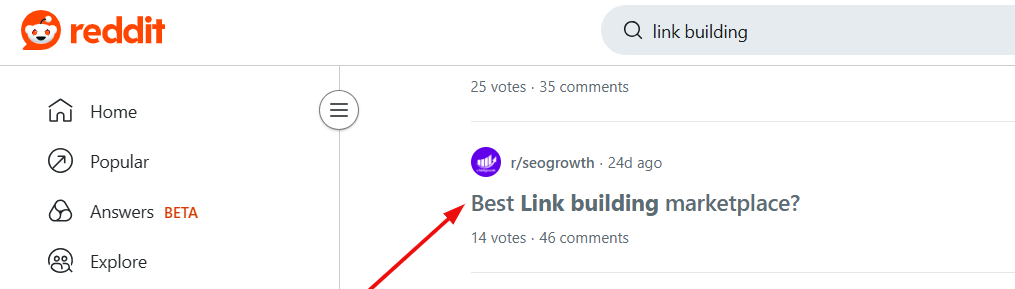
For example, cheap links and mentions on forums, social media or free blogs (Reddit, Quora, Medium, LinkedIn Pulse…).
Another thing you should do is mix generic and branded anchor text so that commercial anchors make up only a small percentage (5–10% of the total).
These supporting links won't push your rankings up, but they will help you protect and camouflage your most valuable ones, avoiding an unnatural links penalty.
3- Control your link velocity
A new website (new domain) cannot suddenly receive 100 links, as that would set off alarm bells. Ideally, you should build links gradually, so that growth is logical and natural.
However, if you get a low-quality link and want to disguise it a little, you can, for example:
- Back it up with good content that is semantically related.
- Maintain activity on social media at the same time.
- Spread links across several pages, not just your homepage or service landing pages.
The key is for the speed at which you build links to go hand in hand with your brand's real activity.
4- Diversify with "parasite SEO"
One strategy you can implement is "parasite SEO", which consists of publishing content on third-party sites that already have a huge amount of authority. For example, media outlets, platforms such as Medium, etc.
Instead of having all your links point directly to your website (which is the one most at risk), you can send the most aggressive or questionable links to that content published on the strong domain:
- You publish an optimised article on a high-authority site (the "parasite").
- You point links at it, even risky ones, so that it ranks on Google.
- That article starts to receive traffic.
If Google detects problems, the one affected is the parasite (the content on the third-party domain), not your site. This way your site stays protected and you avoid a possible penalty.
5- Buy links on quality platforms
The best way to avoid a possible penalty is by building quality links. For this, you can rely on Getalink, the leading link building marketplace for buying links and PR and boosting your brand's branding.
On the platform, in addition to sponsored posts in newspapers and blogs, you will find new review and local citation services, link insertions and more.
They also offer a managed link building service in which they take care of everything (researching media, negotiating prices, designing strategies) so that you don't have to waste time or resources. Trust them – that's what the professionals are for!
Get started now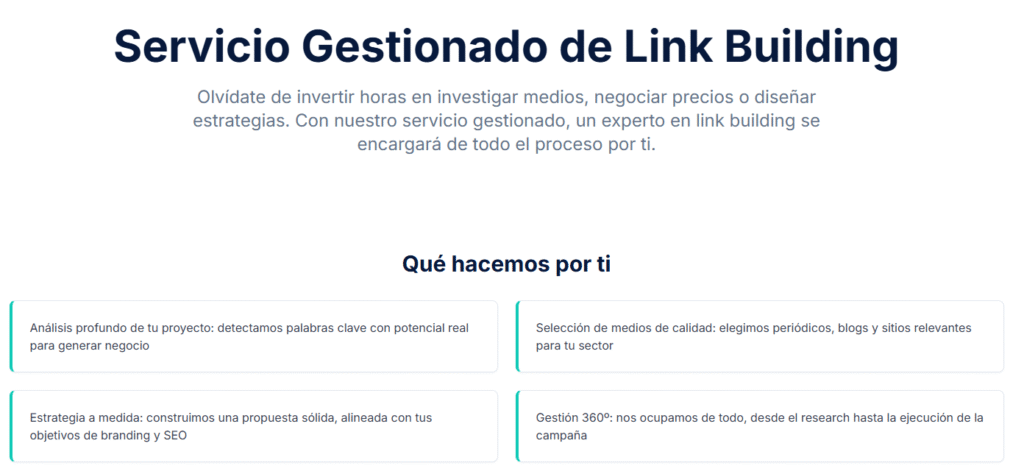
6- Other trusted links
Getting trusted links is the foundation for avoiding penalties. To do so, combine paid links with others that Google also considers reliable, such as university pages, government websites, etc.
How to remove an unnatural links penalty
To remove an unnatural links penalty and recover a penalised website, you will need to clean up your link profile and rebuild trust signals, so that Google reconsiders the penalty.
1- Understand the penalty
The first thing you should do is identify whether the penalty is:
A manual action
In this case, you will know because a notice will appear in Search Console: "Unnatural links to your site".
Here, a human reviewer has assessed your website, which means that cleaning up is not enough; you will also have to prove with evidence that you made a genuine effort (for example, by removing toxic links, contacting webmasters, using the disavow tool, etc.).
Afterwards, you will have to submit a reconsideration request (we'll cover this in the following points).
An algorithmic penalty
Here you will not receive any notice and the only thing you will notice is a sharp drop in traffic. It is usually harder to diagnose but quicker to reverse, since once you clean up the unnatural links, Google starts valuing your site again.
2- Audit your link profile
You need to look for the unnatural links, or suspicious patterns, that may have caused the penalty. To do so, use any SEO tool that lets you audit your link profile:
- Anchor text spam: check that the same commercial keyword is not repeated over and over.
- Domains with fake metrics: websites with apparent authority but zero traffic, full of links to pages about cryptocurrency or other topics irrelevant to your business.
- Links in irrelevant languages: it makes no sense for a French fashion site to link to the website of a carpentry business in Spain.

3- Removing unnatural links
If your problem is a manual action, what matters here is documentation. Google wants to see that you worked to clean up your link profile.
To do so, you should:
- Contact the webmasters of the toxic domains and politely ask for removal.
- Keep evidence, such as emails, contact forms, etc.
4- Use the Disavow tool
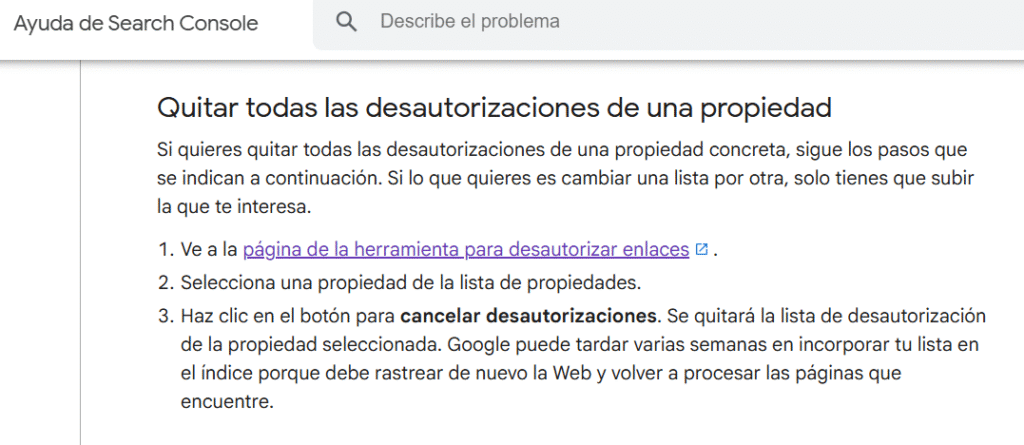
If, after your attempts, you still have links you couldn't remove, it's time to disavow links "very carefully" with Google's Disavow Tool.
- Download the links you have audited
- Paste them into a .txt file (only the links that really pose a problem).
- Upload that file to Google's disavow tool.
Only disavow the domains you are sure are unnatural, "toxic" ones, as otherwise you could weaken your site's authority.
5- Submit a reconsideration request
This final step consists of submitting a reconsideration request, which is the process by which you ask Google to review your site after receiving a manual penalty for unnatural links.
In it, you must show that you identified and cleaned up the manipulative links, disavowed those you couldn't remove and that you are committed to following safe practices in the future.
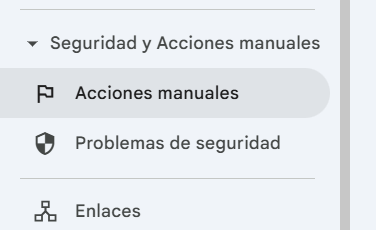
Go to Google Search Console, select your site (property) and go to the left-hand menu: "Security & Manual Actions" / "Manual actions". You will see a notice (e.g. "Unnatural links to your site").
Below it, you will see the "Request review" button. That is where you write your reconsideration request, explaining the actions you have taken.
The request must include three essential elements:
Acknowledgement of the problem: there's no need to go into detail, but you should admit that there were manipulative links.
Example: "We have found that over the last six months artificial links that did not comply with Google's guidelines were added to our profile".
Evidence of the effort made: show and document that you worked on the clean-up.
Example: "We reviewed 320 domains, contacted 45 webmasters and managed to remove 30 links. We have disavowed the rest using Google's official Disavow tool".
Commitment to future improvement: show that you have changed your strategy.
Example: "We now prioritise brand development, digital public relations (PR) and legitimate collaborations to avoid future problems".
6- Rebuild trust
Recovering from a penalty is not just a matter of cleaning up links and waiting. At the same time, you must keep working to make your site trustworthy. You can take the following actions:
- Strengthen your entity: create and update profiles in relevant directories, specialist media and social networks. Make your brand appear consistently everywhere.
- Get clean press mentions: articles in regional media, industry publications or interviews that lend authority to your name.
- Build new relevant links: these are actually the ones that build the most trust.
- Generate social activity: posts, forum mentions and even conversations on networks such as Reddit or X (Twitter) that Google can crawl and index.
7- Wait for Google's response
The review time for manual actions is usually 2 to 6 weeks.
There are two possible outcomes: the Google team accepts it and lifts the penalty, or they reject the reconsideration request, in which case they will ask you for more clean-up. You must repeat the process in more detail and resubmit the request.
And as Google recrawls and reassesses your profile, your rankings will gradually improve if you have rebuilt the foundation of trust. Don't stop building links, keep publishing content and keep your social signals active.
8- Recover from the penalty
Once you have recovered, your priority should be to maintain as natural a profile as possible.
In reality, a penalty is not the end of the road, but rather an audit that can leave you in a better position than your competitors, as long as you manage the process well and keep working on your brand's trust and authority.
Negative SEO: reality or myth?
For years people have talked about negative SEO as if a competitor could flood you with junk links and bring your website down.
That worked a decade ago, but today Google automatically ignores most toxic links rather than penalising them, because it does not have the resources to review each case individually.
For example, if tomorrow your website received thousands of links from irrelevant forums or foreign pages, the normal thing would be for Google to discard them so they pass no value, rather than punishing you for them.
That is why losing sleep over junk links no longer makes sense; what matters is focusing on building a solid brand profile with trust signals. And for that, you can rely on Getalink.
Request a quote for your backlink strategy
Shall we talk about your project?
Tell us what you need (first and last name, email, website, message) and we'll get back to you within 24 hours.
SendFrequently asked questions about unnatural links penalties
What is an unnatural links penalty?
It is a sanction imposed by Google when it detects that your backlinks appear to be manipulated.
How does Google detect unnatural links?
In two ways: through algorithms that look for suspicious patterns and through manual actions applied by human reviewers.
How can I avoid a penalty?
Build a link profile that looks natural, generate brand mentions, control your link velocity and add links from trusted sites.
How do I recover a penalised website?
Audit your links, remove or disavow the toxic ones and submit a reconsideration request in Search Console, showing evidence of the clean-up and your future commitment.
Should I worry about negative SEO?
Not too much, as most junk links are ignored by Google.