

Launching a new business almost always requires a new website. If you build it without a clear link building strategy, you will be at a disadvantage because, among other things, given the current situation with AI Overviews answers (and other LLMs), Google is more demanding than ever when it comes to authority and “brand signals (mentions)”.
That is why you need a strategic approach to link building in order to compete and appear both in Google and in generative answers. In this article we explain how you can do it.
Link building for new websites
First of all, remember that link building starts from the very foundations of the website and cannot be implemented all at once. Both Google and LLMs give priority to, and always surface, sites that build trust.
Most new sites fail because they overuse poor-quality links or buy the wrong link, because there are no “miracle link packs”.
The sites that keep adapting will keep succeeding!
Why is getting links for a new website difficult?
Launching a new website and trying to rank it on Google is complicated because:
- Getting links is hard at the beginning, as nobody knows you and nobody will want to link to you.
- Google tends to distrust new sites, which lack trust signals (brand mentions, backlinks…)
So… what should we do to build authority for our new website?
How to do link building for new websites and build authority
To earn an online reputation you will need to build a real brand so that Google starts to trust your site. And, of course, a link building campaign that lets you get links in your niche (not Fiverr spam) in order to rank.
Let’s take a look:
First links for a new website
The first step is to define your brand: logo, corporate colours and typography, if you haven’t done so yet.
Initial links are the foundation of your digital presence and help Google recognise that your site is not just “one more”, but a legitimate entity or brand. They are low risk and you can get them by:
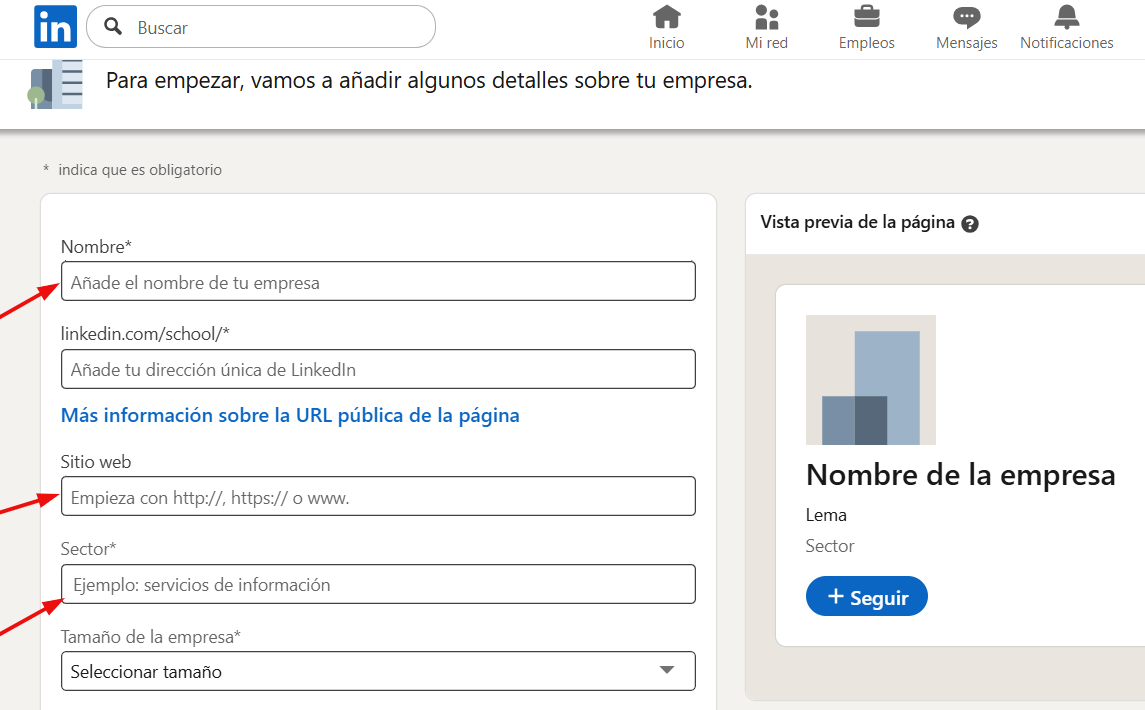
- Creating social media profiles (LinkedIn, X, YouTube, etc.)… and completing every detail: logo, bio, link to your website, description and contact details (NAP: name, address, phone, and make sure they match across all platforms).
- Submitting your site to directories specific to your niche.
- Creating a Google Business Profile (yes, even for non-local businesses).
- Getting local citations on high-DR sites (about.me, sortlist, cronoshare, etc.).
- Including your NAP, logo and structured data on your website (footer, “About” section, contact page).
If you don’t have much budget, don’t buy poor-quality links, as Google may penalise you.
These links matter because they tell Google that you exist as a recognisable entity (company, author or brand) and they reduce the risk of penalties when you move on to more advanced strategies.
Make the most of existing relationships
Before moving on to more complex strategies, take advantage of the professional relationships you already have and tag people, brands and companies related to your industry.
For example, you can make a social media post announcing the launch of your new website and tagging clients you already have.
Reuse your own projects, such as related blogs, to get a few backlinks, and you can also ask industry peers for mentions.
Specialised outreach to get links
In link building, the term “outreach” focuses on building connections with editors, bloggers, journalists or companies in your industry through promotion techniques, in order to broaden your reach, with the aim of asking them to include a link to your site. It is usually done through personalised emails.
It is undoubtedly a smart promotion strategy that you can carry out yourself or entrust to link building professionals who offer professional outreach services, such as Getalink.
Their platform offers a feature where you can request new media outlets, and they take care of hiring them. And if you notice that a particular outlet is not in their database, you can propose a list of URLs and the Getalink team will add them and negotiate the best price for you.
This professional approach gives you access to relevant media without wasting time searching or negotiating, at competitive prices thanks to their network of direct agreements.
Get started nowGuest posts (guest posting)
They still work if you choose relevant, authoritative sites in your niche. Avoid generic portals and look for blogs with a real audience, active social media and good editorial practices.
Offer useful, coherent content, as Google values the semantics surrounding the link.
Quote requests
If you have an interesting opinion or experience, share it with journalists, bloggers and podcasters. You can use platforms such as HARO or contact content creators directly to be featured as a source. It is another effective way to do link building for new websites.
Link insertion
This consists of proposing the inclusion of your link within an existing, relevant article. It is essential that your resource adds real value to the content.
Getalink also offers this service: you just enter the URL of an already published article where it makes sense for your link to appear and add value.
Get started nowEgo bait:
A very simple but effective promotion strategy is to mention other peers in your niche in your content. People love being recognised, and many will share your post or even link to it spontaneously.
For example: “Leading women in marketing in 2025”.
Publish a press release that includes your NAP and a link (if possible).
If you want to start building some authority for your domain, press releases are a way to get your first mentions in relevant media.
Even if your website is new, you can publish an interesting story. For example, present your project as an “innovative mattress rental solution for hotels that want to cut costs without sacrificing comfort”. You can send it to specialist blogs in hospitality, local media or trade magazines in the tourism and hotel sector.
Another example could be an opinion piece based on a survey, your own statistics or an analysis of a current trend. Then send that content to journalists who cover your industry. If it is original and adds value, many will publish it or link to it as a source.
These kinds of links tend to be high authority and build trust both with Google and with your audience.
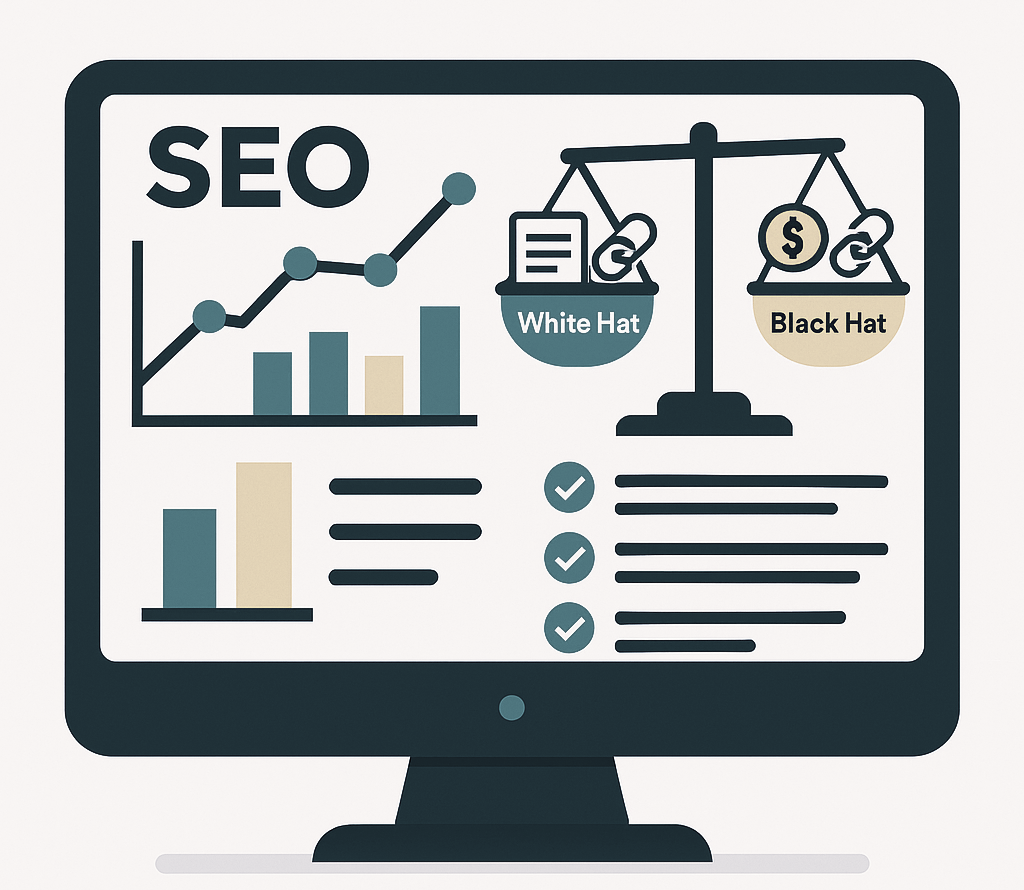
Mix safe (white hat) and more aggressive (black hat) link building strategies
In SEO, following Google’s recommendations to the letter will keep you free from penalties… but it will also be slow. On the other hand, applying more aggressive tactics can help you rank faster, but at the risk of losing all your work.
You can mix both strategies, very carefully, applying analysis and common sense and making smart decisions based on your business goals. The more you practise and fine-tune your strategies, the better you will know how far you can go without compromising the health of your site.
- For example, if you are only working on one URL, getting 100 links in a month to a single URL would look suspicious, but if the links point to 10 category (or product) pages, that same volume can look natural and throw Google off the scent.
- Likewise, your link velocity must be consistent with the age and size of the site. Adding lots of links all at once can look like artificial growth in Google’s eyes.
- Another example is the type of links obtained, since ideally there should be a balance between follow and nofollow links that gives your backlink profile a natural look.
- Besides quality, you shouldn’t get more links from irrelevant blogs than from authoritative media. If, on the other hand, you value some links from sites that have little authority but are in a related niche, that would not be a problem.
- And, of course, analyse the competition to spot opportunities and weaknesses you can use to your advantage, based on the link building budget for a new website.
Co-citations and unlinked mentions
These are mentions without a link, and they are very valuable because the generative answers of AI Overviews, among other LLMs, treat them as signals that associate your brand with a specific topic.
For example, you can put this into practice by creating branded content that mentions industry leaders, such as “top 10 best” lists, comparisons, etc.
This strengthens your semantic presence, because appearing alongside other relevant brands enriches the context of your authority and increases your site’s visibility in AI results.
Ongoing tracking, analysis and improvement
A good link building strategy doesn’t end when you start getting a few links; that is when it really begins. Every quality link or mention you get will make other media and professionals more willing to work with you, because your online reputation is growing.
That is why you should monitor your progress and see which links are working, how your organic traffic is evolving and which pages are gaining visibility. Use SEO tools such as Ahrefs, Google Search Console or SEMrush to check these metrics and adapt your strategy accordingly.
Mistakes when doing link building for new websites
New sites can fall into common mistakes such as publishing on low-quality sites with a dubious reputation. Steer clear of these links, because Google detects these signals and will not hesitate to penalise your website or hold back its visibility.
Another common mistake is asking for links through mass emails. Ideally, you should combine brand mentions, citations, public relations and, above all, building genuine relationships within your niche. That mix is what lets you build something trustworthy from the outset that generates real authority.
Finally, don’t fall into the trap of waiting for links to come naturally, as almost all bloggers and content creators expect some kind of compensation for publishing an article or including a link. Be clear that, at the beginning, getting links will be an active and strategic task, not something spontaneous and natural.
Conclusions
Automate all repetitive tasks, such as sending emails, using tools and virtual assistants to save time.
Review every link and monitor your performance regularly, and remember that success in link building for new websites doesn’t depend on tricks or quick shortcuts, but on a consistent, well-executed strategy.
If you build your site like a real business, with a coherent brand and relevant links, you will outperform those who simply wait for results without taking action.
There are no secrets: do every day what others don’t, and over time you will see the results. And if you decide to outsource, do it wisely.
Request a quote for your backlink strategy
Shall we talk about your project?
Tell us what you need (full name, email, website, message) and we'll get back to you within 24 hours.
Send