
You can have an online store with flawless design, impeccable technical foundations and solid SEO optimisation… but if nobody links to you, you won't rank. For an online store, links are the votes of confidence Google (and now AI too) needs to place you ahead of your competitors.
In fact, industry surveys show that the number of referring domains is still the signal most strongly correlated with page rankings.
In this guide you'll learn how to build a link building strategy specifically for ecommerce, with proven tactics.
What is link building for ecommerce?
Link building for ecommerce is the set of strategies used to gain authority and online reputation for your store, which you earn when other relevant websites link to yours.
An ecommerce site also has its own link building particularities:
- The target isn't just the homepage: in an online store, the pages that generate the most traffic and sales are usually the categories. That's why a good strategy points links towards categories (and star product pages), not only to the homepage.
- You have an asset others don't, the product: you can give it away, lend it to a creator, set up an affiliate programme… A physical product is the perfect bargaining chip working in your favour to earn links and mentions for your online store.
We'll assume you already have the basics of ecommerce SEO covered, so we'll focus on explaining how to do link building for ecommerce.
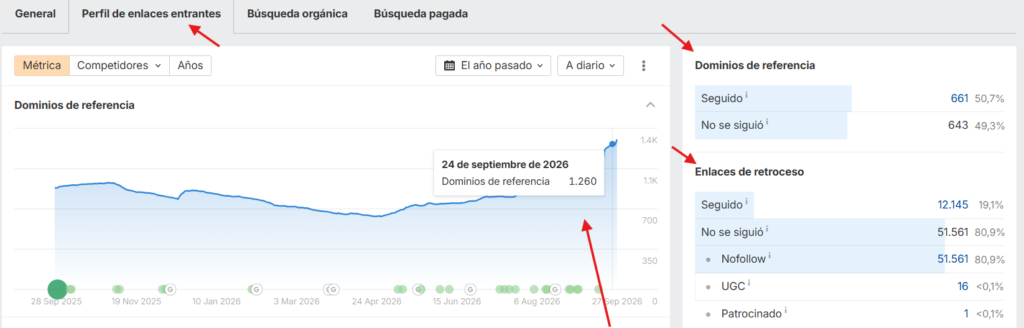
Audit your link profile first
It's not about getting links "willy-nilly"; buying links without rhyme or reason is pointless. Ideally, start with an audit that gives you a realistic view of where you stand and tells you which actions will have the most impact. In your off-page analysis, it's worth reviewing:
- The quantity and quality of your current links and the authority and relevance of the sites linking to you.
- Diversity of domains and link types (dofollow and nofollow). Google sees a profile with links from many different sites as more natural than many links from the same domain.
- The anchor text of your inbound links (make sure it isn't over-optimised).
- Branded search volume: how many people search for you by name.
- Toxic links: low-quality or spammy links that can harm you and that you should identify (and disavow if necessary).
- Broken links: backlinks pointing to pages that no longer exist or have changed URL, which you're wasting.
With that baseline, set the minimum authority you want to reach. One exercise you can do is to look in Google Search Console for the keywords where you're in the top 10 but outside the top 3, analyse the authority of the competitors who are up there (with Moz, Ahrefs, Majestic or SE Ranking) and work out how many links (and to which pages) you need.
Competitor analysis
Analyse your competitors' links to see which sites link to them and which ones. Search Google for the main keywords in your sector, see who's in the top 3 and study their link profile with the SEO tool you normally use. There you have a list of media outlets and blogs that will serve as a starting point for your ecommerce link building strategy.
Types of links for an ecommerce site
Not all links are worth the same. Before diving in, be clear on these concepts:
- Dofollow vs. nofollow: dofollow links pass authority; nofollow links pass less, but still bring traffic, visibility and brand signals. A healthy, natural link profile should include both. 79% of SEOs believe nofollow links indirectly influence SEO, and chasing only dofollow links creates a pattern that "smells" artificial.
- Authority of the linking domain: a link from a relevant, authoritative website is worth more than dozens from weak sites. Not for nothing do most SEO professionals require a minimum DR before placing a link.
- Topical relevance: a link from a website related to your sector carries much more weight than one from an unrelated topic. Quality links for your store are those coming from relevant sites in your industry.
- Editorial link: 92% of first-page links are editorial (within the content).
- Anchor text: the anchor text should be varied, natural and descriptive of the content it leads to. For categories you can use more exact anchors ("best cameras for photographers", "photography equipment"). But in general, avoid always repeating the same keyword (Google penalises this over-optimisation).
The golden rule will always be quality over quantity. Better 10 links from leading, related media than 50 from sites that pass on neither authority nor traffic. And take it step by step, as overly sudden growth doesn't look natural.
What should I look for before buying a link?
Buying links can speed up your rankings, but only if you choose well. Not all links add value: a quality one gives you a boost, while a bad or irrelevant one adds nothing and can even harm you, leading to a penalty for unnatural links.
So before investing in a link, check a few aspects that set a good media outlet apart from one that isn't worth it:
- Media authority: it should have solid authority (DR/DA) and, ideally, higher than your website's.
- Topical relevance: the site should be in your sector or a related one; a link from a related website is worth much more.
- Real traffic: the outlet should receive real organic visits and not be on a downward trend.
- Editorial context: the link should sit within quality content that makes semantic sense. Avoid it being lost in a footer.
- The outlet's healthy link profile: the website shouldn't sell links en masse or have a profile that looks like spam.
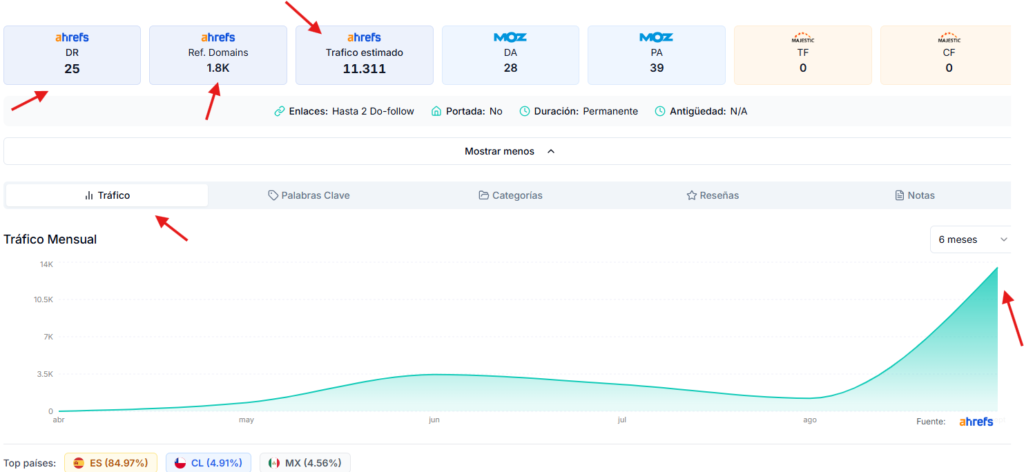
With a platform like Getalink you have these metrics in plain sight (authority, traffic, relevance, link type, anchor and price) to choose each outlet carefully.
Get started nowLink building strategies for ecommerce
Now let's get into the link building tactics that really work for an online store:
Buy links in media outlets with Getalink
This is one of the most scalable actions to increase your domain authority. It involves publishing content with your link in news media, magazines and niche blogs related to your sector.
Getalink is the link building and digital PR marketplace chosen by more than 1,000 agencies, with a presence in 120+ countries and 30,000+ media outlets waiting for your ecommerce site. One of the differences compared with other platforms is that agreements with media outlets are direct (no resellers), which translates into verified, safe links at a better price. It also offers:
- Copywriting included: 100% original articles of at least 600 words, optimised for Google and AI (SEO and GEO). You can also send your own content for the same price.
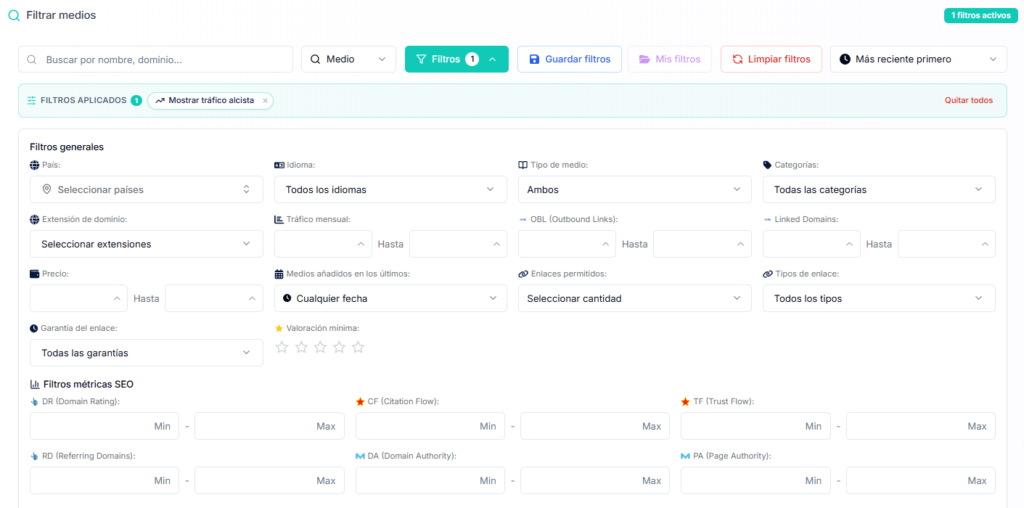
- Metrics from Ahrefs, Moz, Majestic and SE Ranking (organic traffic, authority, relevance to your store, link types, anchor text, price…) updated every 7 days so you can choose each outlet carefully.
- Advanced filter system: by topic, country, language, metrics, price, accepted link type, guarantee or whether the outlet marks the content as sponsored.
- Prior review: you approve the content before it's published; nothing goes live without your OK.
- Project Manager: a link building expert designs and executes your strategy (media, content and anchoring) if you'd rather delegate.
- Guaranteed links and average delivery in 5 working days.
And since link building in 2026 isn't just about links, on the same platform you have brand mentions (to appear in AI), link insertions in articles already published and indexed (more immediate impact), Google Business Profile reviews, press releases...
Sign up for free and start getting quality links for your ecommerce site!
Get started now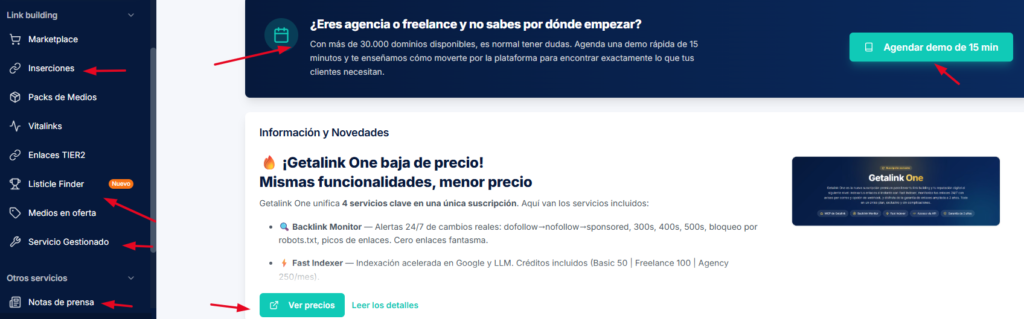
Press releases and digital PR
Digital PR is currently considered the link building tactic that works best. Send press releases to newspapers and specialist magazines in your sector with content they'll want to publish: industry studies, proprietary data, launches, success stories or company milestones.
Media outlets live on publishing interesting content every day, and if you make it easy for them with valuable information, they'll help you gain visibility and links. Digital PR is also what best builds the consensus across sources that AI values so highly when deciding to cite your ecommerce site.
Specialist blogs and buying guides
Analyse the SERPs for the keywords your customers search for in their consideration phase: comparisons, "best X", reviews and buying guides. Appearing in these specialist blog guides gives you a link and traffic very close to conversion.
One example is how big tech brands such as MediaMarkt earn links and visibility by appearing in buying guides from outlets like Xataka.
What's more, these listicles are exactly what AI cites: list-style articles such as "best [category]" account for a huge share of the pages referenced in generative answers.
Affiliate programme
Set up your own affiliate programme to have a network of "sales reps" promoting your products. In ecommerce it's especially powerful because physical product sales are easy to attribute.
On the one hand, you get inbound links from your affiliates' websites and highly qualified traffic ready to buy. A benchmark example is PcComponentes, which has relied on its own affiliate programme as an acquisition channel for years.
Product gifting and influencers (UGC)
If your product generates interest, lean on influencers and micro-influencers and give them product in exchange for organic exposure and, if they have a website, links.
Collaborating with creators is one of the most cost-effective ways to gain visibility in a specific segment, and it provides social proof that customers value before buying.
View this post on Instagram
Industry competitions and events
Two simple and very effective tactics to earn links and exposure:
- Run a competition related to your product and, as an entry requirement, ask participants to share the post with a link to your store from their website or social media. You generate links, engagement and awareness in a single action.
- Take part in events in your sector. Many have a website listing participants, sponsors or speakers, and by registering you get a link from a relevant, topical domain.
Suppliers and "where to buy" pages
If you distribute third-party brands, contact those suppliers and manufacturers. Some have a "where to buy" or official stockists list on their website. Asking to be included is a highly relevant link that's very easy to get. It works both ways: if you sell brands, ask them to include you; if you're a brand, create your own stockists page.
Brand mentions
Look for websites and platforms where you're mentioned but not linked. A useful Google search operator is:
yourbrand -site:yourdomain.com
You'll see the websites talking about your online store; contact them and ask them to turn that mention into a link. It's one of the easiest wins, because the reputation work is already done.
And even if you don't get the link, remember that the mention itself already counts for AI.
Do link building with images and your own assets
Create linkable assets, such as studies with original data, infographics, calculators, downloadable guides or your own product images.
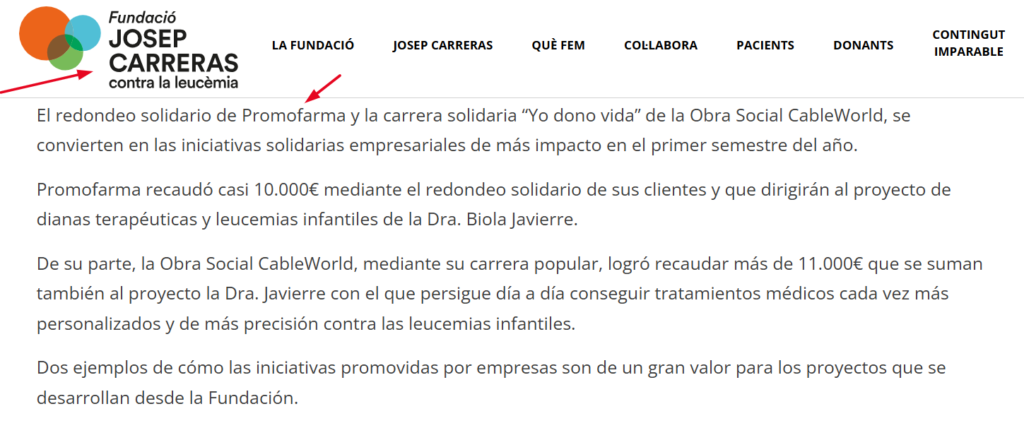
With images, you can also use reverse image search to find who is using them without attribution and ask for a link to your product page. This type of content attracts links naturally and steadily over time.
Guest blogging
Offer yourself as a guest author on blogs related to your sector, with valuable content and a contextual link to the related category or product.
Done well (on relevant websites with useful content, not on link farms), this ecommerce link building strategy is still a very valid way to gain authority.
If a relevant blog in your niche links to you, Google understands that you're relevant too.
Forums and communities (Reddit, Quora)
Take part in forums and communities in your sector by adding real value, not spam. Answer questions, share experience and only link when it fits naturally. Beyond the link (many are nofollow), these communities are a source that AI consults heavily.
Recent analyses place Reddit among the sources most cited by Google AI Overviews and Perplexity. Having your store discussed organically and regularly there is a powerful signal for an LLM to take you into account.
Your blog as a link generator
Your own blog will help you earn links, because if the content is useful people will share it, which generates organic, natural links, the ones Google values most.
It also supports internal linking to your online store's categories and products. For example, an article like "how to do product photography for your store" can link internally to the related course or service, improving SEO and, along the way, potentially driving a sale.
Links to categories
These are two link building strategies very specific to ecommerce:
- Point links to categories with relevant anchor text, as they're the pages that sell the most. Don't concentrate everything on the homepage. And reinforce it with internal linking from the menu and the blog to the star products you most want to sell.
- Before deleting a discontinued product page, check its inbound links : if that URL received authority from other websites, simply removing it throws that away (and creates a 404). Set up a 301 redirect to a similar product or its category to retain that authority.
Black hat SEO tip for getting links:
I could tell you many more ways to get links, but they're not quality links and they don't comply with Google's guidelines, so forget about them, because SEO penalties follow.
Local SEO and Google Business Profile as a source of links
If your ecommerce business also has a physical shop or premises, local SEO is a source of authority you're overlooking. Bear in mind that Google ranks local results by combining relevance, distance and prominence, and that's where local links and mentions add up. You should work on:
- Google Business Profile: set it up, as it gives you visibility with nearby customers. Fill in your NAP (name, address, phone number) properly, link to your website and also add links to specific products or services. Look after your reviews, ask satisfied customers for them and always reply (they build trust and are a reputation signal for Google and for AI).
- Geo-targeted link building: get links in local media and newspapers in your area, quality local directories, associations or industry events in your city. It will increase your authority and prominence in local searches.
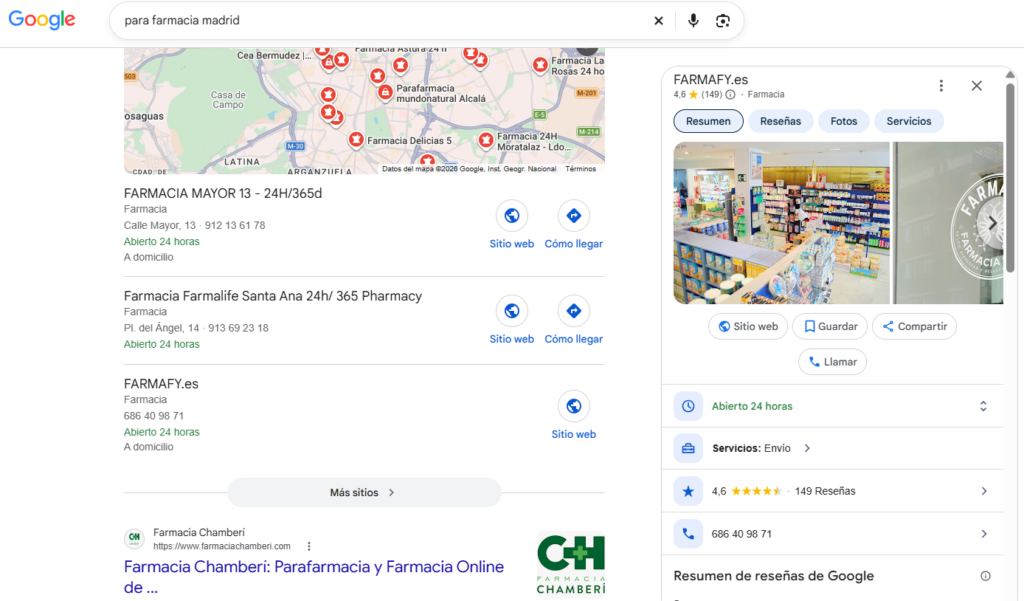
Getalink also has a database of local digital media outlets so you can publish in your area of operation.
Get started nowLink building for GEO: mentions so AI cites you
The big change is that link building for ecommerce no longer works only to rank on Google, but also for your visibility in AI. ChatGPT, Gemini and Perplexity recommend brands based on what's said about them in reliable sources such as trusted media outlets, niche blogs, reviews…
That's why the best link building strategy today is also a GEO strategy for ecommerce. The more quality, consistent mentions you have, the more likely AI is to consider you a go-to option.
Work with good judgement (audit first, quality over quantity), make the most of your great asset (the product), point links to the pages that sell and be consistent. And if you want to accelerate with links and mentions in related, verified media outlets, Getalink makes it easy.
Sign up for free and start building the authority your ecommerce site needs to rank on Google and in AI!
Get started nowFrequently asked questions about link building for ecommerce
How many links do I need to rank my online store?
There's no fixed number, as it depends on the competition in your sector and the keywords you want to target. The most reliable way to estimate it is to analyse the backlinks of the websites already in the top 3 for those searches and see what authority and links they have. That gives you a realistic benchmark of how many links (and of what quality) you need.
Is buying links safe for my ecommerce site?
It is if it's done well: the risk isn't in buying links, but in doing so without judgement. Irrelevant links, links from sites with no authority or growing too fast are what can lead to penalties. The key is to prioritise quality media outlets related to your niche, with real traffic and a healthy link profile, while also keeping things natural (a variety of anchors and domains).
What should I look for when buying links?
Above all, look at the outlet's authority, whether it's related to your niche and whether it has real organic traffic. Also check that the link sits within quality editorial content.