

- Definition: Anchor text is the word or phrase used to add a hyperlink to another page. It is the descriptive text of a backlink.
- Role in SEO: A tool that lets you expand information towards other related pages, commonly used within a blog post.
Why anchor text matters
1. User experience: It tells users what they will find before they click, expanding on the information.
2. Search rankings: It helps search engines understand the linked topic, increasing web traffic and improving rankings. It is essential not to use spammy links and to avoid over-optimisation.
Important note: Google can now understand the context of the content, valuing generic and specific anchor texts alike.
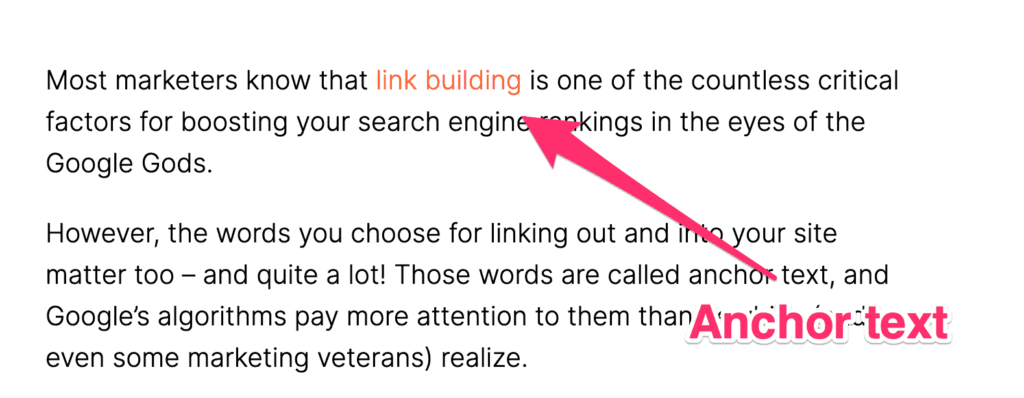
Types of anchor text
1. Generic: Uses general words, such as “Here” or “More information”.
2. Branded: The hyperlink is the brand name, for example, “Getalink”.
3. Keyword: Links an exact keyword related to the topic of the target site.
4. Partial match: Includes keywords and other words for a natural anchor.
5. Long tail: Partial anchors with longer phrases.
6. Semantic: Use of synonyms of a keyword.
7. URL: A direct link using the target URL.
8. Images: Linking directly on images, using the ALT text to provide context.
How do you write the perfect anchor text?
User experience + SEO optimisation: They should be intuitive for users and informative for search engines.
Recommendations: Use descriptive, easy-to-understand keywords, avoid unrelated links, and vary your anchor texts so they look natural. We will also try to make the anchor eye-catching so that it earns a click and brings us visits.
A link that drives visits to your website is worth double, don’t forget it!
At Getalink, we strongly recommend using a varied mix of anchors to avoid possible Google penalties.