
Before artificial intelligence arrived, selling online only required ranking your ecommerce store on Google. Now you also need to appear in LLMs (Large Language Models), AI systems designed to understand, process, summarise, translate and generate human-language text with great fluency.
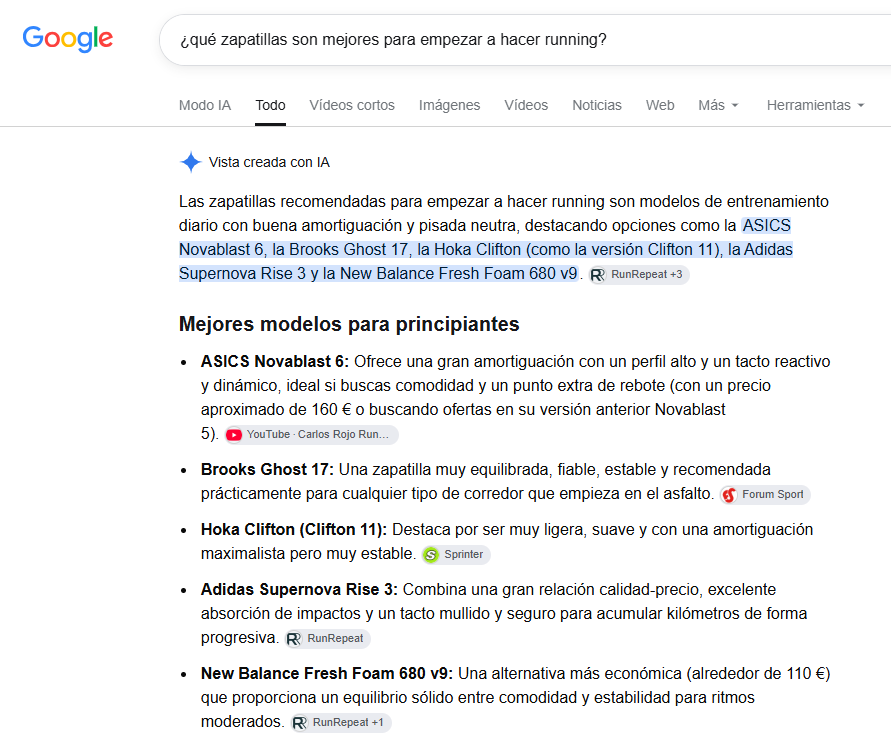
Some of these AIs, such as ChatGPT, Gemini, Perplexity, Copilot and Google's AI Overviews, recommend products, so the question is no longer just ranking on Google but also working to get AI to recommend your online shop.
Keep reading, because in this practical guide we explain how to do GEO for ecommerce and rank your online shop in AI tools.
What is GEO (Generative Engine Optimization)?
GEO is optimisation for generative engines (AI). If SEO is about ranking your online shop in search engines like Google, GEO is about positioning it within the answers generated by artificial intelligence.
For example, when someone asks: “Which collagen brand is reliable to take during menopause?”, the AI doesn't show the traditional ten blue links; it gives an answer. That's where your ecommerce store needs to be now to generate business.
The data makes it clear:
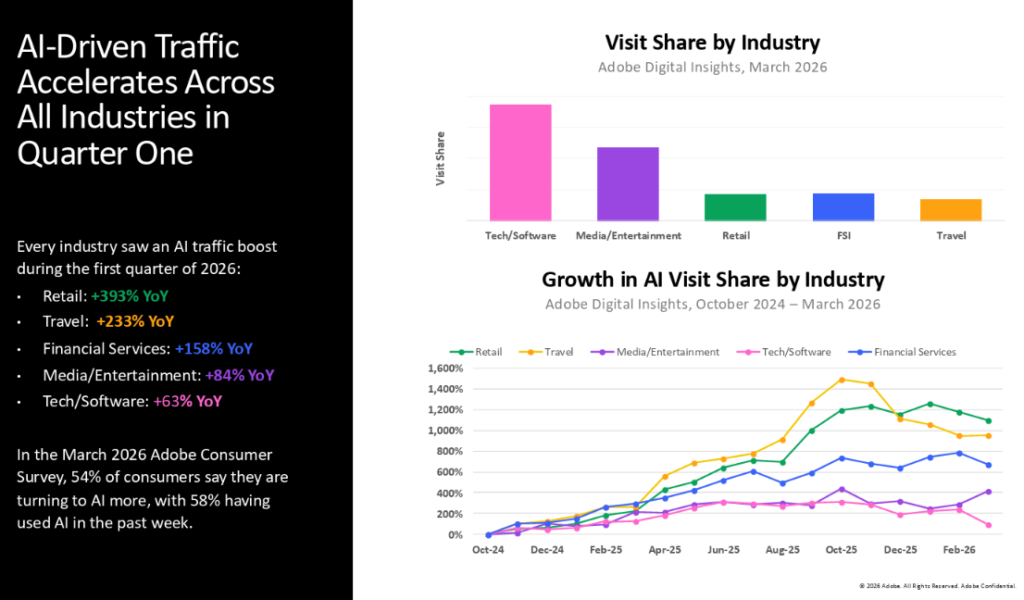
- Traffic from generative AI grew 693% year on year during the 2025 Christmas season for US ecommerce. And in the first quarter of 2026 it was still up 393%. (Adobe Analytics, AI traffic grows but retail sites lag in AI search visibility).
- In March 2026, visits coming from AI converted 42% better than those from other sources (a record), generated 37% more revenue per visit and spent 48% more time on the site.
- The benchmark study on GEO (arXiv paper 2311.09735: GEO) tested nine content tactics across 10,000 queries and concluded that adding quotes, data and statistics can increase visibility by up to 40% in generative answers. In other words, GEO isn't hype; there are concrete, measurable ways to appear in AI.
Bear in mind that GEO and SEO go hand in hand: GEO relies on the same signals as off-page SEO (authority, mentions, reputation…). At Getalink we offer all these reputation signals, both to rank on Google and to gain AI visibility.
Get started nowWhy GEO matters for your ecommerce store
Here are the three main reasons why GEO is no longer optional for an ecommerce business:
- The volume of traffic from AI tools to online shops multiplies quarter after quarter.
- It's high-quality traffic: It converts better, because users arrive after doing their research inside the chat, so they land on your store already convinced to buy.
- “Winner-takes-most” rules (the winner takes almost everything): An AI answer only has room for three or four brands. If you're not in that group, you don't exist for that query. AI visibility studies (how to appear in ChatGPT... data from 145 real queries in fashion and insurance) in sectors such as fashion show how the brands that capture most of the recommendations sell more.
What do AIs value when recommending an online shop?
AIs don't return thousands of ranked results like Google; they generate a short answer based on what they consider reliable, and to decide who to name they mainly look at:
- Authority and mentions in third-party sources: If several trusted websites talk about you, the AI interprets it as consensus. This is, by far, the most powerful factor for GEO.
- Clarity about what you sell and to whom: If your proposition is vague, the AI won't associate you with any sector. For example, if you sell perfume and cosmetics but also supplements for women, you need to make this very clear in your site architecture so the AI understands you and shows each product at the right moment.
- Reviews and online reputation: Reviews, ratings and what is said about your brand outside your website.
- Useful content that answers real questions: Not generic product descriptions.
- Structured data and semantic context: So it can understand your catalogue without ambiguity.
And here's a dose of reality: AI visibility fluctuates a lot from one month to the next, so don't obsess over counting how many times it mentions you, but rather work on what is said about you, your differentiating value and the areas for improvement your customers point out.
A practical trick you can apply is to ask ChatGPT directly what customers think of your brand and check whether that perception matches the one you believe you have.
Another important nuance is that each AI “reads” the internet in a different way:
- ChatGPT relies on Bing's index and its own crawler, so you should register your site in Bing Webmaster Tools. Its star reference source is usually Wikipedia.
- Gemini and AI Overviews use Google's index, so all your SEO work already plays in their favour. Reddit is one of their dominant sources.
- Perplexity cites linked sources in almost all its answers, so being a citable URL is key. It also draws on Reddit.
- In Ahrefs' study of 75,000 brands, YouTube mentions were the single signal most correlated with AI visibility (≈0.74), because their transcripts feed both Google and OpenAI's models.
8 practical GEO strategies for ecommerce
Now for the practical part: these are the GEO strategies for ecommerce you can implement right away in your online store. We assume you're already working on the SEO basics; if not, start with our ecommerce SEO guide, because they're the foundations GEO is built on.
1. Define your category
The more specific you are, the easier it is for the AI to associate you with a particular category and cite you when someone asks about it. The more clearly defined your sector, product type and audience are, the more likely a model is to recommend you.
For example, you're not “a clothing shop”. You are:
- “Online shop for sustainable technical clothing for trail running”.
- “Ecommerce specialising in Korean cosmetics for sensitive skin”.
2. Don't focus only on selling
AIs recommend those who educate. Create content that answers specific questions:
- “How to choose trainers based on your gait type”.
- “Differences between whey and plant protein”.
- “Which sofa to choose for small flats”.
Don't write to sell, write to solve. Here your blog is your great ally, and it's what gives you topic authority.
One format you absolutely should go for is lists and comparisons (“best X for…”), because they're exactly what AI cites: “best” articles account for a huge share of the pages referenced in generative answers.
One example is how health brands like Mayo Clinic dominate AI answers. What they do is collect their users' real questions (an “ask the expert”) and, when a piece of content performs well, they develop it in greater depth. Many online pharmacies are already replicating this on their product pages.
In case it helps, this table shows what a customer might ask alongside the type of content you should create:
| What the user asks the AI | What content do you need? |
| “Best [product] for [need]” | Comparison guide or list (“best X for Y”) |
| “Is [product] right for [use]?” | FAQ within the product page |
| “Differences between [A] and [B]” | Comparison article with table and verdict |
| “How to choose [category]” | Buying guide on the blog |
| “Where to buy [product] in Spain” | Well-optimised product and category pages + external reputation |
Does that make sense? The idea is that you shouldn't write with a keyword in mind; write with the real question someone would ask ChatGPT in mind.
3. Copywriting for GEO
Following on from the previous point, it's worth mentioning that in GEO, copywriting is as important as strategy. AI doesn't reward the longest text but the clearest. You need direct sentences, concrete data and language it can extract and reuse without ambiguity.
In fact, according to a Semrush analysis of more than 337,000 URLs, a promotional tone is the only factor that correlates negatively with being cited by AI (-26.2%), while clarity and the question-answer format are among the factors that add the most. In other words, the more “salesy” your text sounds, the less AI cites you.
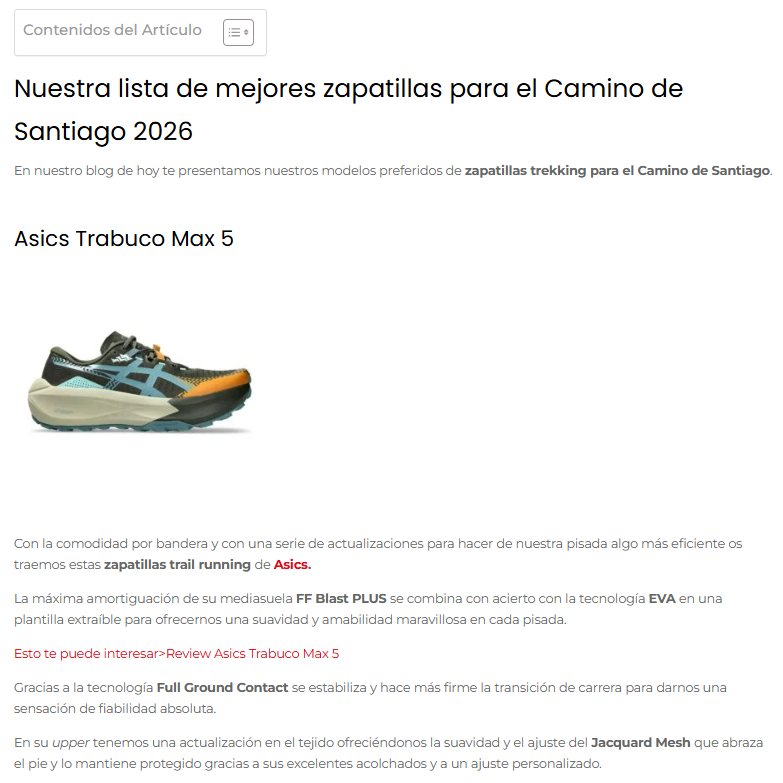
An example of a well-crafted product page would be, instead of “men's trail running shoe”, writing “shoe for flat feet with good grip on wet surfaces”. That's what AI understands and recommends.
4. Optimise your product pages with context
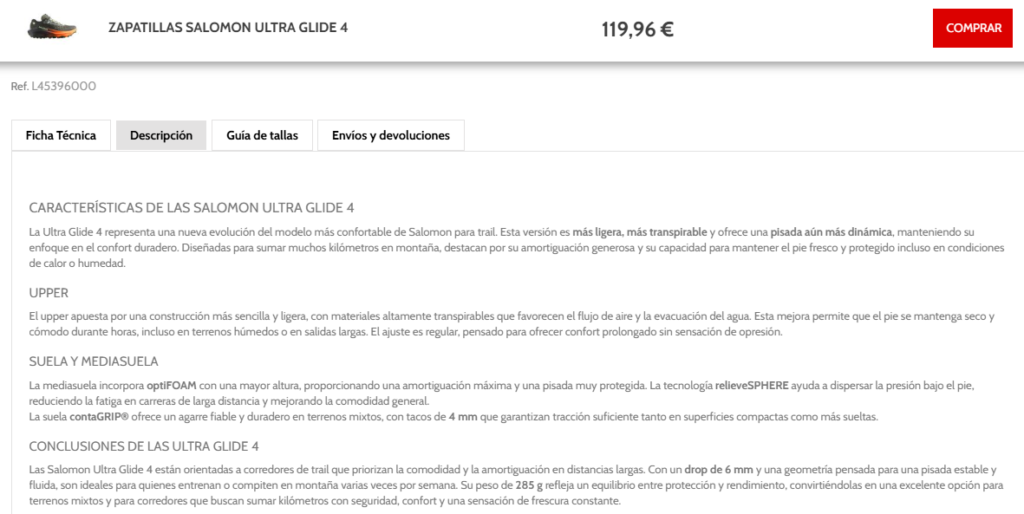
Another GEO strategy for ecommerce that works is optimising product pages. An empty product page, like: “Model X trainer. Light and comfortable.”, adds nothing for the user, the AIs, Google or anyone else.
The GEO-optimised version would add everything the user might ask:
- What type of user it's ideal for: Think in profiles, because you don't recommend the same thing to a beginner as to an expert, just as a pharmacy doesn't advise the same product to a 30-year-old woman as to a 50-year-old.
- In what situations it's used.
- Comparisons with alternatives and when to choose one or the other.
- Concrete, verifiable benefits.
And something technical: if you set up bundles or cross-selling, explain it in text, not just with JavaScript, because ChatGPT doesn't read it. For example, “if you buy this camera, we recommend this tripod”. This content is crawlable and can appear in a generative answer.
5. Work on your online reputation in external media and social networks
If nobody talks about you outside your website, AI won't either. This is by far the most important factor in GEO: you need to be mentioned in several reliable sources:
- Get mentions in authoritative industry media on a regular basis. This is where a platform like Getalink helps you get mentions and links in media relevant to your sector.
- Look after forums and communities (Reddit, Quora): They're among the sources most cited by Google AI Overviews and Perplexity. People talking about your shop naturally is a very powerful signal for GEO.
- Invest in video: According to Ahrefs, YouTube is the single signal most correlated with AI visibility, and in Google's AI Overviews it accounts for 21-23% of citations. A video that answers “how to choose X” is exactly what AI cites. So analyse your sector and create videos that answer exactly what AI needs to cite.
- Get into lists and comparisons (“best shops for…”, “best X”): A single listing on an authoritative page is multiplied across many answers and platforms.
- Generate UGC: Customer reviews and comments now matter more than ever, as they're extremely valuable for AI visibility and for conversion.
If you want to dig deeper into how to get these mentions, check out our guide to link building for ecommerce.
Get started now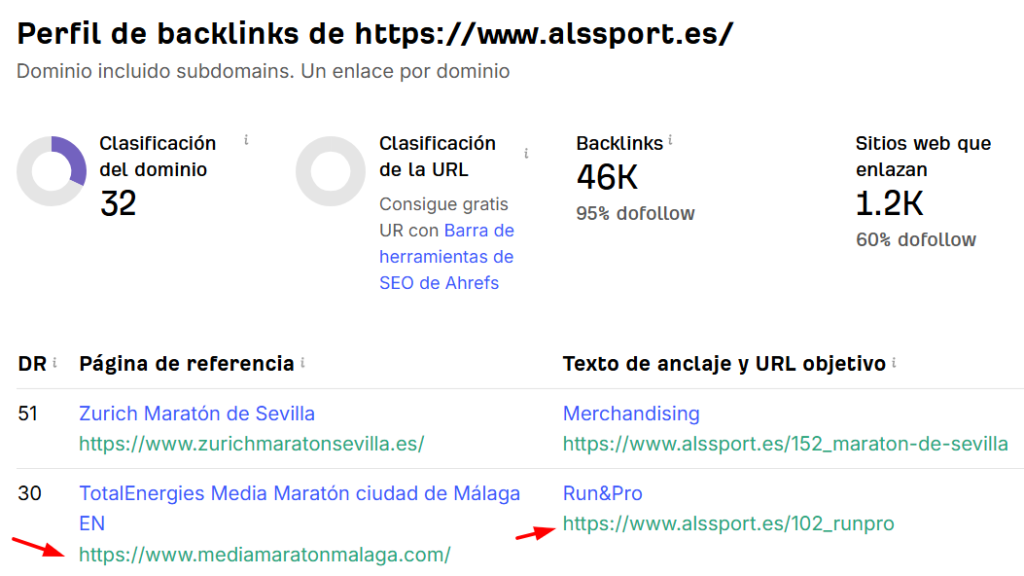
6. Improve your semantic structure
You don't need to be a developer, but you do need to make it easy for AI to understand your business:
- Proper use of H1, H2, H3.
- Well-structured FAQs (with real questions from your customer service, tickets, social media and forums). Use them as support, not as a substitute for the content that converts.
- Schema markup / JSON-LD on products (Product, FAQPage, VideoObject). It's the technical pillar of GEO: without it, AI can't confirm price, stock or features... and when in doubt, it discards you. You don't need to code it in WordPress/WooCommerce; plugins like Rank Math or Yoast generate it automatically, just check the data to make sure it's complete.
7. Build a brand
AIs recommend brands:
- Branded search and reputation: The more your brand is searched for and talked about, the more weight you gain in AI, as branded search volume correlates with AI visibility.
- Entity consistency: Make sure your brand is always written the same way on your website, comparison sites, social networks and blogs. In the world of AI, a name written in three different ways can fragment your authority into different entities.
8. Analyse what AIs are answering about your sector
Try it yourself. Ask ChatGPT, Gemini and Perplexity:
- “Best online shop for…”
- “Where to buy…”
- “Recommended brands of…”
And observe which brands they cite. That's free strategic information that tells you who dominates your category, which websites each AI considers reliable and whether you appear or not, so you can focus your strategy accordingly.
To make it easier, here are some ready-to-copy-and-paste prompts for ChatGPT, Gemini or Perplexity (replace what's in square brackets with your category):
- “Recommend the best online shops for [category] in Spain and tell me why for each one.”
- “Where can I buy [products] with good value for money?”
- “Which [category] brands are the most reliable?”
- “Compare [your brand] with its main competitors.”
- “What do customers think of [your brand]?”
In each case, note down whether you appear, in what position and which sources the AI cites. Repeat the exercise once a month with the same set of prompts to measure whether your GEO work is paying off.
ChatGPT Shopping
More and more people, instead of searching on Google, ask ChatGPT directly what to buy. And ChatGPT no longer responds only with text: it shows products with their photo, price and a link to the shop, within the conversation itself. This feature is called ChatGPT Shopping.
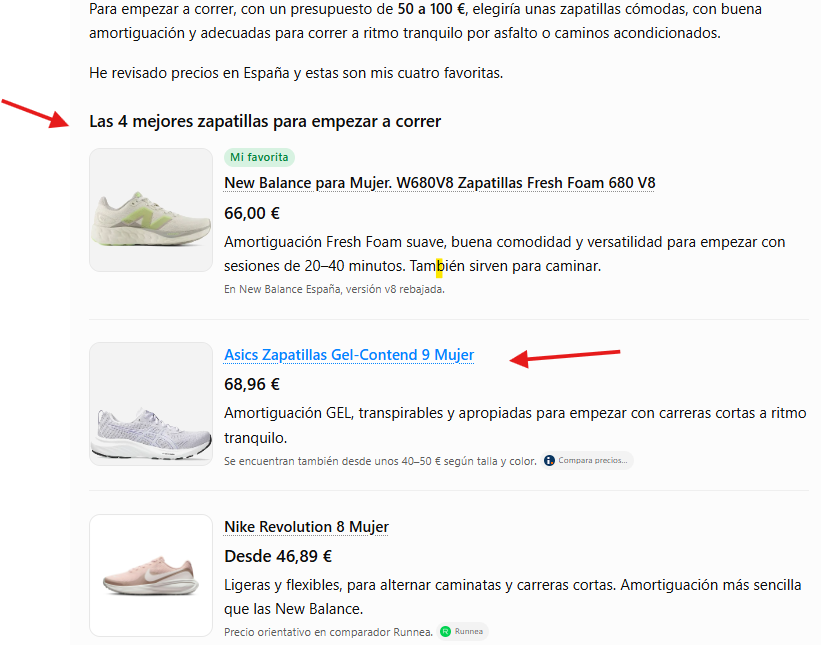
How does ChatGPT know which products to show? Through the Agentic Commerce Protocol (ACP), an OpenAI system that reads shops' catalogues and shows the products that match what the user is asking for.
Before you get started, there are two important things worth understanding:
- Today it helps you get discovered, not to sell inside the chat: ChatGPT helps you appear, but the purchase ends up being made in your shop, as always. Your goal, therefore, is to be recommended and drive the visit to your website.
- For now it only works in the United States: It will be extended to more countries, but with no set date, so start getting it ready for when it arrives.
What to prepare in your online shop to appear in ChatGPT Shopping
- Let ChatGPT in: ChatGPT crawls shops with a bot called OAI-SearchBot. If your website blocks it (common if you once shut out AI bots), it won't see you. Check this in your robots.txt file.
- Send it your catalogue: This is how you control how your photo, price and reviews appear. If you sell with Shopify or Etsy, it's already connected automatically. Other platforms can request it through OpenAI's form for merchants.
- Look after each product's information: Good, clean photos (no logos or text over them), clear and honest titles and descriptions, reviews, properly tagged data (Schema) and, above all, price and stock always up to date.
- Measure what comes in: Visits from ChatGPT usually carry the tag “utm_source=chatgpt.com”. Create a filter in Google Analytics 4 to see them separately and track their evolution.
Common GEO mistakes in ecommerce
Before we finish, these are the mistakes that most hold back an online shop's visibility in AI:
- Blocking AI bots: If your robots.txt shuts out crawlers like OAI-SearchBot (ChatGPT's), you're invisible to them no matter how much you optimise.
- Relying only on your website: If nobody talks about you outside your domain (media, blogs, forums, YouTube), the AI has nowhere to “learn” that you exist.
- Product pages without context: “Light and comfortable” tells the AI nothing. Explain who it's for, in what situations and compared with which alternatives.
- Turning all content into question-answer: FAQs help, but creating all your text in Q&A format can kill the content that converts.
If you recognise three or more, there's your roadmap to start putting things right.
Getalink: reputation and mentions so your ecommerce store appears in AI
As you've seen, the heart of GEO is external authority: having your brand talked about in media, blogs and sources that AI considers reliable. That's exactly what we do at Getalink, the link building and digital PR marketplace chosen by more than 1,000 agencies, with a presence in 120+ countries and 30,000+ media outlets relevant to your business.
Advantages designed for your AI visibility:
- Brand mentions for AI: Editorial mentions in relevant contexts that strengthen your ecommerce store's authority and its recognition in AI answers.
- Buying links in relevant media, prioritising topical relevance and editorial quality.
- E-E-A-T signals: Content signed by specialist journalists that adds credibility and trust.
- Digital PR and press releases to generate coverage and consensus across multiple sources.
- Marketplace with metrics from Ahrefs, Moz, Majestic and SE Ranking, with direct agreements and average delivery in 5 working days.
Sign up for free and start building the reputation your ecommerce store needs for AI to recommend you!
Request a quote for your backlink strategy
Shall we talk about your project?
Tell us what you need (full name, email, website, message) and we'll get back to you within 24 hours.
SendFrequently asked questions about GEO for ecommerce
What is GEO and why is it important for an ecommerce business?
GEO (Generative Engine Optimization) is optimisation for AI-based engines such as ChatGPT, Gemini or Perplexity. Unlike traditional SEO, it aims to get your shop cited within the answers generated by AI. It matters because more and more users rely on AI assistants to decide where to buy.
How can I start optimising my online shop to appear in AI tools?
Start by clearly defining your value proposition, create content that answers your customers' real questions (including lists and comparisons), and improve the context of your product pages with structured data (JSON-LD).
What is the most important GEO factor for ecommerce?
Working on your online shop's external reputation through reviews and mentions in media, blogs, forums and YouTube. Clarity, specialisation and, above all, brand authority are the keys to getting an AI to recommend you. At Getalink you have everything you need to achieve it.