

Most SEO professionals think that Link Sculpting, or link shaping, died with Google's anti-spam updates back in 2011 and 2012. However, this technique is not dead; it has simply evolved, like everything else.
In this article we explain how Link Sculpting can channel the flow of authority and relevance through an internal linking architecture and through advanced strategies and techniques that boost your key pages (money pages). Stick around, because we're getting started!
What is Link Sculpting?
Link Sculpting is an advanced SEO strategy that consists of controlling the flow of authority (PageRank) through the internal links of your own website, so that Link Juice isn't wasted (or "leaks") to less relevant pages.
It's about being intentional with your internal link structure, using dofollow and nofollow attributes to decide which pages pass on authority and which don't. However, that classic method became obsolete, as Google confirmed in Matt Cutts' famous 2009 statement that adding "rel=nofollow" to certain internal links did not redistribute PageRank to the other links; instead, that value simply evaporated. That's why the idea of Link Sculpting was declared dead.
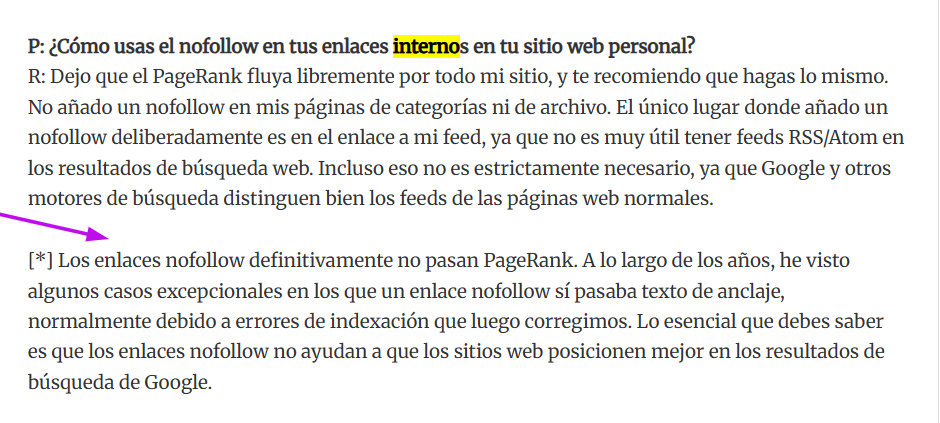
Nowadays, when we talk about link sculpting we mean optimising the internal link architecture in a meticulous and strategic way, so that maximum authority flows to the pages that generate business. It's about planning which pages to link internally, from where and with which anchor text, to maximise the impact on SEO rankings.
As a fun fact, although PageRank officially disappeared in March 2016 and Google stopped displaying this metric, it still exists and is now used internally, in a more complex way and alongside multiple ranking signals.
Difference between PageRank and Link Juice
To avoid confusion, let's draw a quick distinction between PageRank and Link Juice. The former is Google's original metric that measures a site's authority or online reputation based on the quantity and quality of the links it receives.
The latter is the strength or authority passed through those links from one page to another, whether between different sites (Link Building) or within the same site (internal linking or interlinking).
What is an internal link and what is anchor text?
Before going further into Link Sculpting strategies, let's review these basic definitions:
Internal link:
It's a link from one page to another page on the same domain or website. For example, a link from a blog post to a services page is an internal link.
Although in SEO we tend to downplay navigation, menu, sidebar or footer links, as they are site-wide and carry less contextual weight, internal links placed within the main content of a page (contextual links) do influence how authority is passed (Link Juice) and relevance between the pages of your site.
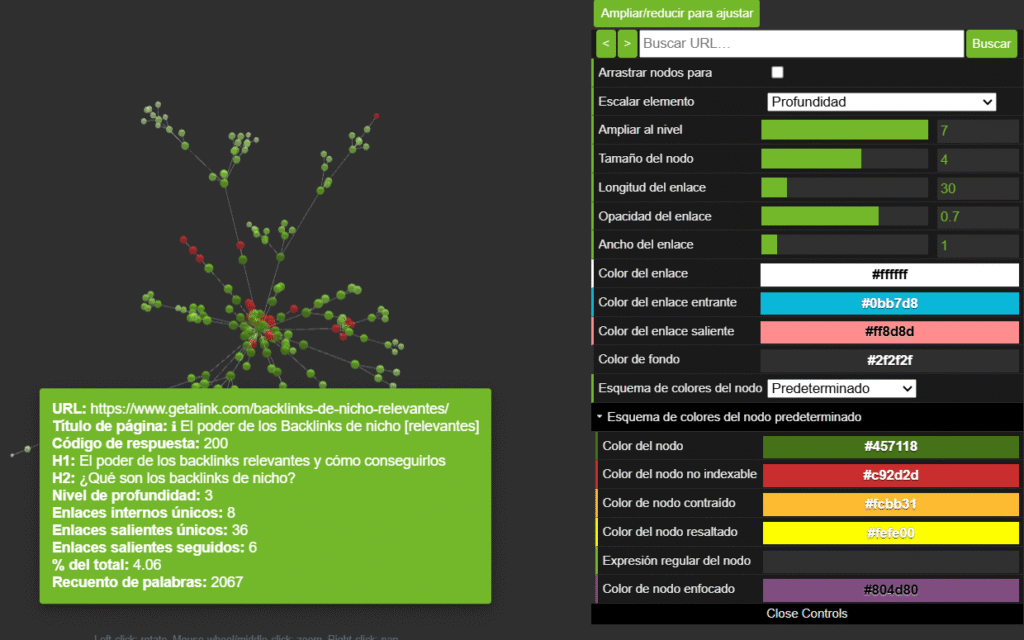
Anchor text:
It's the clickable text of a link, made up of the words or phrases the link creator chooses to point to the other page. It gives Google a clue about the topic or keyword of the destination page.
That's why choosing your internal anchor texts carefully is important in Link Sculpting strategies, as it allows us to emphasise specific keywords or concepts related to the page receiving the link.
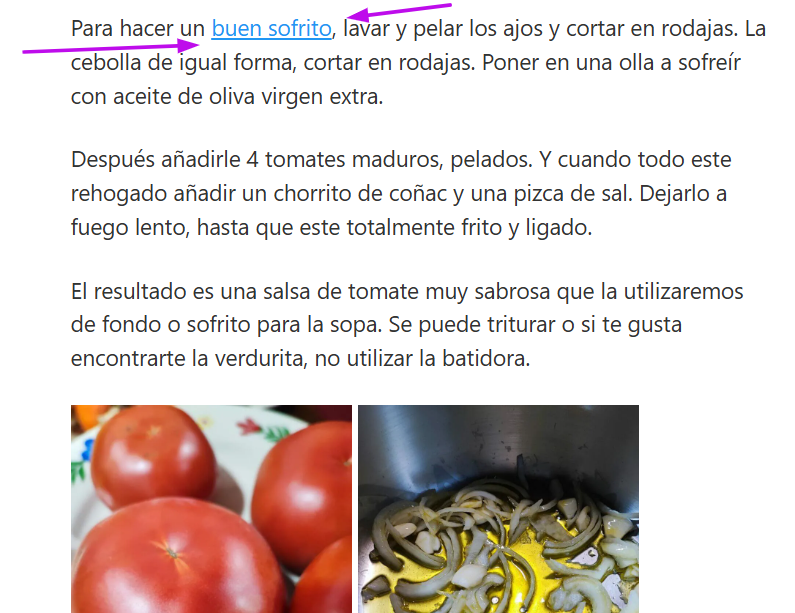
For example, imagine a cooking blog with a main recipe for seafood soup. Within that recipe, the following text appears:
"For the seafood soup to have a deep, balanced flavour, it's essential to prepare a quality sofrito beforehand."
The word "sofrito" would be the anchor text of the internal link. By clicking on that term, the user is taken to another page on the same website that explains in detail how to make a good sofrito. In this case:
- The source page is the seafood soup recipe.
- The anchor text is "sofrito".
- The destination page is a specific guide on how to make the perfect sofrito.
- The topical relationship is completely natural and logical for both users and search engines.
From an SEO perspective, this internal link helps Google understand that the linked page is relevant to the concept "sofrito" and, at the same time, reinforces the topical consistency of the cooking and recipe content. It also improves the user experience by offering complementary information exactly when it's needed.
This is a clear example of how a contextual, semantically coherent anchor text can pass relevance and authority within a well-executed Link Sculpting strategy.
Link Sculpting strategy
Now let's get down to business and walk you through the Link Sculpting strategies you can apply to your website today.
The aim is to identify which pages you want to boost and where you'll pass authority to them from. To do this, it helps to work by topic clusters or sections of your site at a time. The overall strategy consists of these steps:
1. Identify money pages and pillar pages:
The first thing is to draw up two lists:
- One list with the pages on your site whose rankings you want to improve (for example, your service pages or product pages) along with their main keywords. Sort them by how competitive each keyword is; you can look at search volume, difficulty, etc.
- And another list with the pages on your site that already have authority and topical relevance (for example, long-form informational articles such as guides, studies, etc.). You can sort these pages by authority metrics, such as the number of external backlinks they have, or metrics like Ahrefs' DR. These will be your internal linking "pillar" pages.
2. Match competitiveness with authority:
Now comes the important part, where we internally link each target page from an authoritative "pillar" page, making sure they share the same topic.
Take the most competitive keyword from your first list, find the relevant page with the highest authority from the second list and create an internal link from that pillar page to the target page, using the keyword you want to boost as the anchor text.
This way you'll be passing maximum "strength" through the most competitive keyword signal.
Topical relevance is crucial, as the source page of the link must be sufficiently relevant in content to the destination page. If the topical connection isn't clear, the impact of the link will be smaller, even if the source page has a lot of authority. For example, imagine a digital marketing and SEO website:
- Target page (money page): /seo-para-ecommerce/. Main keyword: ecommerce SEO (high competition).
- Authoritative page (pillar page): A long, well-ranked article titled "Complete guide to technical SEO for online shops" that has already earned backlinks.
In this case, the right execution would be to include a contextual link like this within the guide's content:
"Proper technical optimisation is only one part of the process. To achieve real results in sales, you need to apply a complete ecommerce SEO strategy." In this case:
- The "pillar" page is a complete guide.
- The topical relationship is direct and obvious.
- The anchor text reinforces the target keyword.
- The link is integrated naturally into the content.
So this internal link passes authority, semantic context and relevance, making it a high-SEO-impact internal link.
3. Repeat the process systematically:
Apply the previous step to all the pages you want to boost. Link the second most important keyword from the second strongest relevant page, and so on.
What we're building is an internal link map, where each priority page gets a boost from another supporting page. By working cluster by cluster, you make sure you keep topical consistency and don't mix subjects that could confuse Google.
Repeated across different pages and keywords, this approach builds an internal link network that multiplies the effectiveness of your website's internal authority.
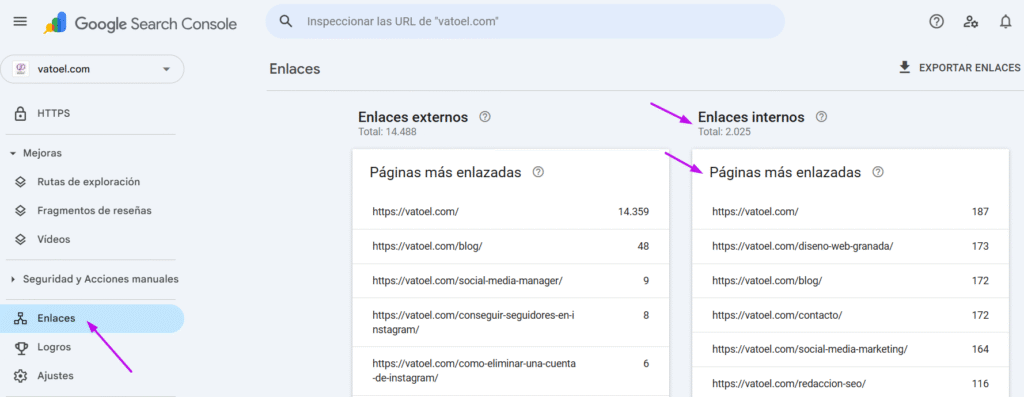
Advanced link sculpting strategy
The basic tactic described above works for most sites and niches. But if you do SEO in highly competitive sectors, you can take Link Sculpting a step further with advanced execution. So here's how this tactic works in five steps:
1. Content clusters:
Don't place internal links at random; every page on your site should have a role in the content architecture. For example, define what each of them is:
- Your "money" pages are the pages that target commercial terms and are directly geared towards conversion. E.g. Page: "Ecommerce SEO". The goal is to sell.
- Your supporting content consists of informational articles that target long-tail keywords or complement the main topic. E.g. Article: "How to optimise product pages for SEO". The goal is to attract traffic.
- And your "pillar" pages or guides are long-form content that acts as authority hubs (central nodes) within their topic. E.g. Guide: "Complete guide to SEO for online shops". The goal is to accumulate authority and distribute it through internal links to the money page using relevant anchors.
| Page type | What it is | Goal | Example |
|---|---|---|---|
| Money page | Page focused on commercial terms and conversion | Generate leads or sales | /seo-para-ecommerce/ |
| Supporting content | Informational article targeting related long-tail keywords | Attract traffic and reinforce topical relevance | How to optimise product pages for SEO |
| Pillar page (hub) | Long-form guide that centralises the topic and authority | Concentrate and distribute internal authority | Complete guide to SEO for online shops |
2. Optimising internal anchor texts:
A common mistake is thinking that internal links don't need the same attention as external ones. In fact, it's a good idea to keep a balanced anchor text profile within your site too. A practical rule is to mirror Link Building best practices internally. For example:
- 60-70% of your internal anchors should be branded, generic or URL anchors. E.g. "yourcompany", "yoursite.com/page").
- 20-30% should be partial match or semantic variations of your keywords.
- And less than 10% should be exact match. What's more, if you overuse exact-match anchors in your internal links, you could dilute the signals or even create patterns that look unnatural to Google.
3. Aligning competitiveness with authority:
Although we've already mentioned this strategy, it's worth stressing that it becomes even more important in highly competitive niches.
Think of your internal links as authority "multipliers": if you use a powerful page as your pillar page, the link will pass much more value.
For example, suppose you want to rank for the keyword "best online casinos", a highly competitive query. Linking this page from a light 500-word news post would have limited impact, as that content holds very little authority. The right strategy would be to link it from a mega-guide of at least 3,000 words on online betting that already has organic traffic and natural backlinks.
Your most competitive keywords should receive internal links from the pages with the highest authority on your site.
4. Links in PDFs and external content (parasite SEO):
Within Link Sculpting strategies, links included in PDF files often go unnoticed, despite their potential. These links embedded in PDFs hosted on your own domain, such as ebooks, reports or catalogues, can be crawled by Google and pass internal authority.
That's why it's advisable to include contextual links to key pages of the site in these PDF documents, using relevant and natural anchor texts.
Even though many users download the PDF without interacting with the links, Google can interpret them as part of the internal linking, turning them into reinforcement within the site's SEO architecture.
On the other hand, in parasite SEO strategies, based on publishing content on high-authority platforms such as Medium or LinkedIn Pulse, it's also possible to apply Link Sculpting strategies, this time at an external level.
The idea isn't to link indiscriminately to any URL on the site, but to do it strategically. Firstly, this content published on external platforms can link to each other, creating a small network that reinforces its authority. This way, the external authority these platforms provide is concentrated on the site's priority URLs, instead of being diluted across secondary pages.
Although this practice sits on the edge of grey hat, careful and coherent execution can bring authority to your sales pages.
5. Automation on large sites:
On small sites (for example, fewer than 50 pages), Link Sculpting can be managed manually without much difficulty. However, when you're working on large-scale projects, such as ecommerce sites with thousands of products or content publishers with thousands of URLs, automation becomes essential.
The first step is to run a full crawl of the site with tools such as Screaming Frog to analyse the current internal linking. Then you should combine this data with performance metrics, such as impressions and clicks from Google Search Console, and with the keyword difficulty of each URL.
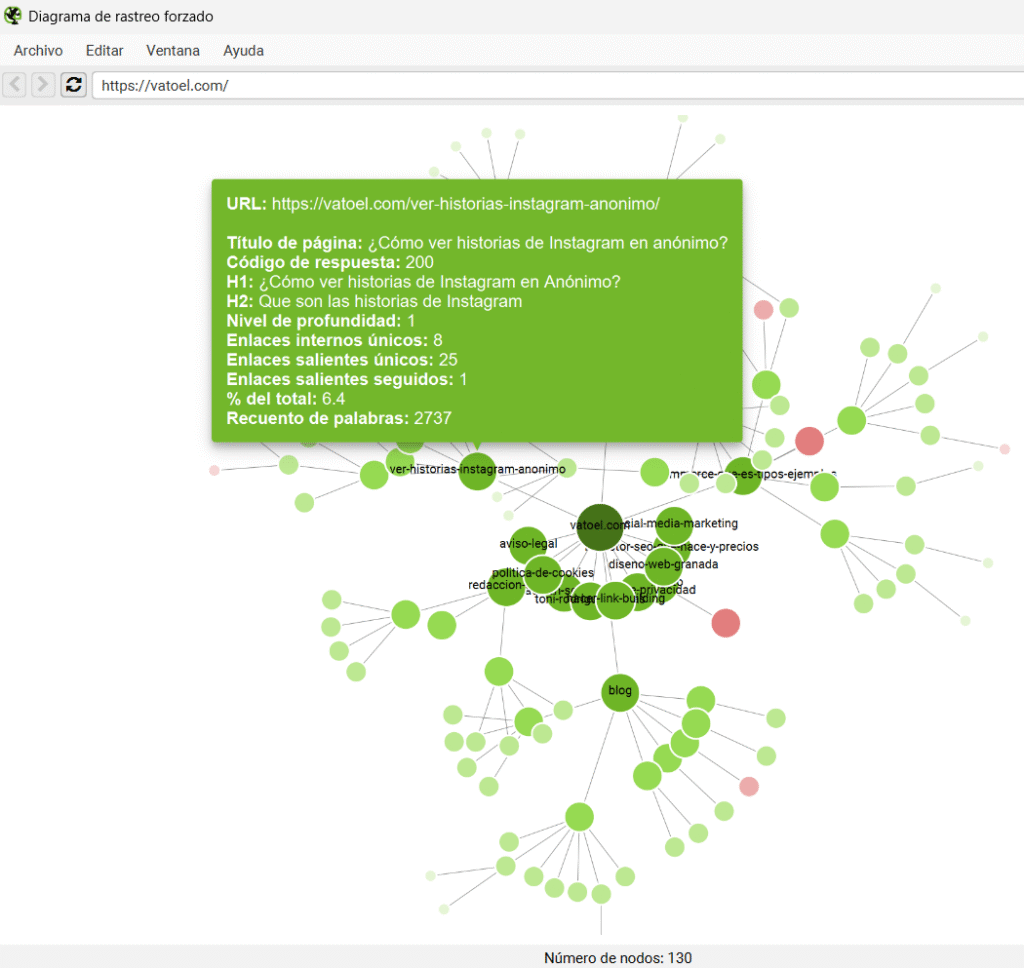
With this information you can define an ideal internal link map, that is, which pages should link to which, and with what type of anchor text.
To execute this strategy at scale, there are tools such as InLinks or Link Whisper that make it easier to insert internal links in bulk following predefined rules. In more advanced projects, you can even implement scripts within the CMS to automate link creation in specific content blocks.
The goal is to set up a programmatic internal linking system, taking into account each page's authority and topical relevance, that allows you to optimise the distribution of internal authority.
Frequently asked questions about Link Sculpting
What is Link Sculpting in SEO?
Link Sculpting is an SEO strategy that consists of controlling internal linking to direct authority and relevance towards the most important pages of a website.
Does Link Sculpting still work?
Yes, Link Sculpting still works, but it is no longer based on using nofollow. Today it is applied by optimising the internal link architecture and the topical relevance between pages.
Which pages should receive the most internal links in Link Sculpting?
The pages that target the most competitive keywords and generate business (money pages) should receive internal links from the pages with the highest authority on the site.
Is it advisable to use nofollow on internal links?
No. Google confirmed that using nofollow on internal links does not redistribute PageRank and can lead to a loss of internal authority.