
If you work in SEO, over the last year you will have heard that it is dead something like 700 million times. With the arrival of AI, what has changed is the way Google answers our queries, so we have had to adapt to this new situation.
The same goes for link building: you need to earn quality links more than ever, because AI cites trustworthy, relevant and authoritative publications in its generative answers.
Drawing on recent studies, which we will cite below, and on our own experience, we bring you this analysis of whether “link building is dead” or not, and we hope you find it useful.
Links are still decisive for SEO: Google Trends analysis
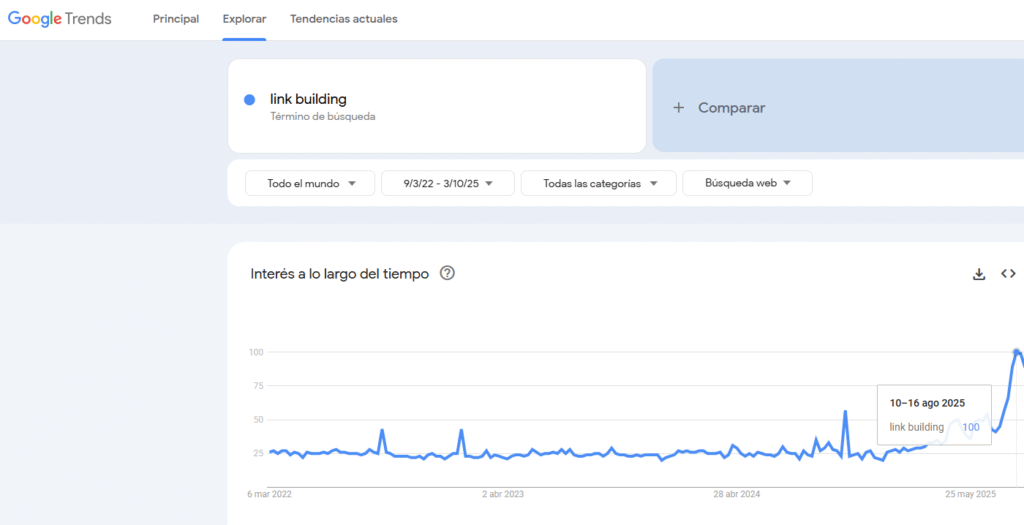
A quick look at Google Trends shows that interest in link building is on the rise.
The global search trend for the term “Link Building” (2004-2025) has reached record levels, despite it having been declared dead time and again. So links are still decisive for SEO.
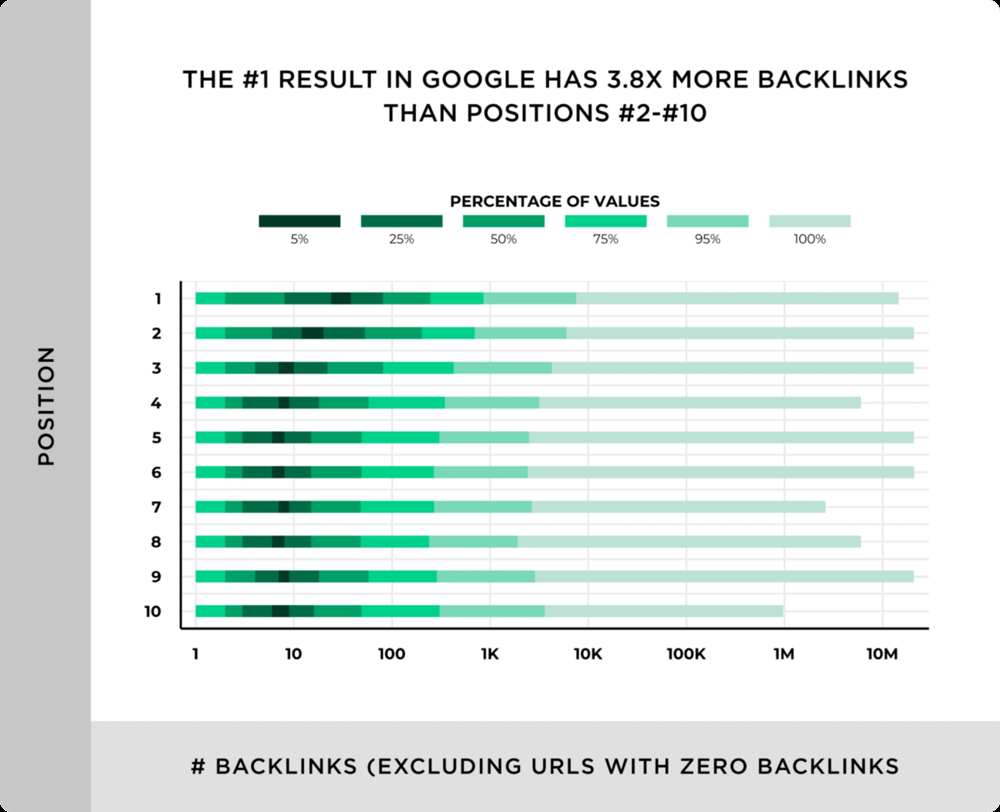
On the other hand, recent link building studies, confirm that backlinks are still correlated with the top positions in Google’s organic results.
Analysing the results, it was concluded that pages in Google’s top 10 have significantly more inbound links than those ranking lower down. On average, the #1 organic result on Google tends to have almost 4 times more backlinks than positions #2 to #10.
That said, correlation does not equal causation: do pages rank highly because they have more links, or do they earn more links because they are at the top?
Although the debate is open and it is not clear whether pages rank highly because they have more links or vice versa, what is certain is that the metrics tell the real story: quality backlinks are still essential for ranking, especially in highly competitive niches.
Spammy link building really is dead: veteran SEOs say so
The intrinsic value of links persists, but what did “die” was the mass link building approach.
During the last decade it was possible to improve rankings through sheer quantity, creating hundreds of links from any source using automated techniques. For example, thousands of links in forums, comments or blogs with no topical relevance.
Now the traffic drops websites suffer after updates show that link spam no longer works, because Google is getting better and better at filtering out and discounting these unnatural links. This has prompted statements like these from veteran SEO experts around the world:
Barry Adams, a renowned SEO consultant, has gone as far as saying that link building understood as mass link exchange has been dead for years, meaning that old spammy practices no longer work and can even attract penalties.
Another specialist, Kevin Rowe (founder of the agency PureLinq), says that link building is still alive only if it is done with a legitimate, quality-driven approach:
“Link Building isn’t dead, it’s just white-hat now (link building isn’t dead, it is simply a white-hat method now).
Both agree on creating real value that attracts links organically and through digital public relations (Digital PR) to earn mentions in relevant publications.
Digital PR, now more important than ever
Given this situation, we cannot say that link building is dead; rather, it has evolved towards a much smarter and more strategic approach, such as earning links on trusted sites that mention your brand.
This shift takes shape in what we now know as Digital PR, that is, digital public relations campaigns whose goal is to earn mentions and links in authoritative publications.
This strategy is based on creating original, valuable content such as proprietary studies, surveys, press releases, infographics or resources that are interesting enough for well-known publications to use them as a reference and link to them.
These links not only pass PageRank, they also strengthen brand authority. When a company is mentioned on influential sites in its own niche (newspapers, specialist magazines, blogs or even unlinked mentions), it gains credibility with users and strengthens its online reputation in Google’s eyes.
It is not about “getting links for the sake of getting links”, but about building trust to gain visibility and authority.
Link building in the AI era: quality links + brand reputation
The same applies to AI-generated answers, so the question that now arises is this: does ranking higher on Google really increase your chances of being cited in AI summaries or overviews?
We decided to keep digging and found data suggesting that yes, links still have an influence. Tools such as ChatGPT or Bing gather information from multiple sources and present it directly to the user, and the evidence shows that the sites ranking best on Google are more likely to appear in those citations.
Links remain a relevant factor even in the era of AI-driven search. Let’s look at the data that confirms it:
AI cites sites with quality links: Ahrefs study
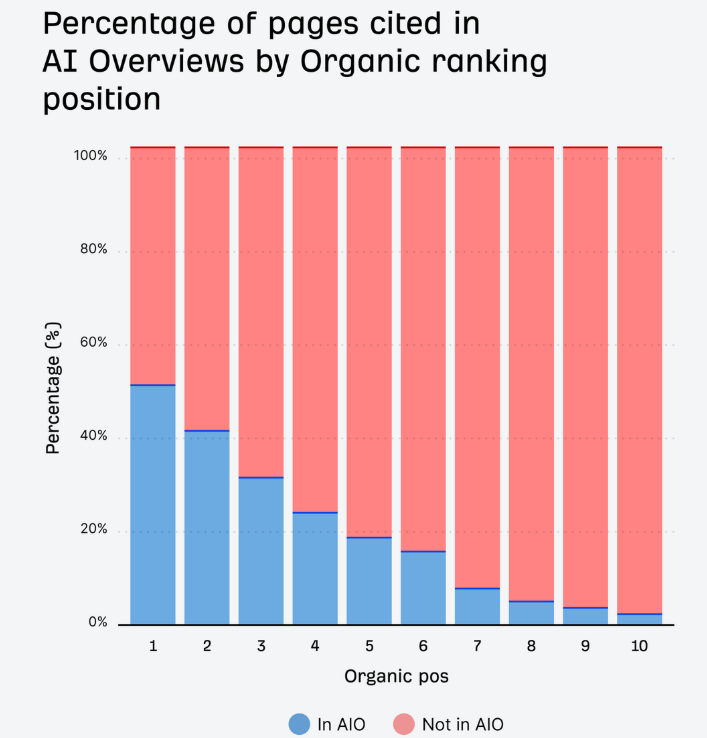
This is shown by the results of the Ahrefs study, which found that around 50% of pages ranking #1 on Google also appear cited as a source in AI results.
AIOs tend to link to large websites that rank organically for many keywords and have substantial backlink profiles.
This means that pages ranking higher in the SERPs are not only more likely to be cited, but also tend to be cited more prominently in AI Overviews.
Ranking high increases your chances of being cited by AI, and to reach the top you will need quality backlinks.
SE Ranking study
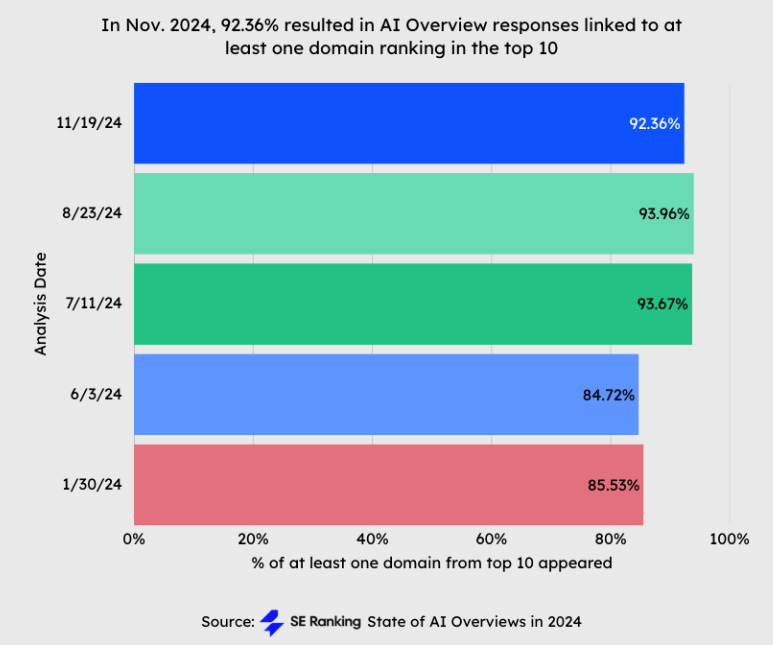
This other analysis by SE Ranking revealed that 92.36% of the time, the sources cited in AI overviews included at least one page from Google’s organic top 10.
The study, carried out at the end of 2024 on AI Overviews and based on 18,767 keywords, showed that the percentage of top-ranking posts cited by AI has risen steadily over time. This reinforces the close relationship between organic rankings and visibility in AI-driven results.
Brand mentions: BuzzStream study
Brand mentions with or without a link (unlinked brand mentions) are becoming increasingly prominent. Today, AI can cite your brand even when there is no hyperlink, which shows that brand authority and online reputation carry as much weight as the number of backlinks.
As the BuzzStream report highlights, high organic rankings influence AI-generated answers, but they are not the only decisive factor. A strong brand presence can keep your visibility afloat.
In the era of AI search, the key is to combine quality backlinks + brand reputation.
This combination is what ensures that both Google and AI systems, including AI Overviews, recognise your site as a trustworthy source worth citing in their generative answers.
Links now matter much more for local SEO: Ahrefs study
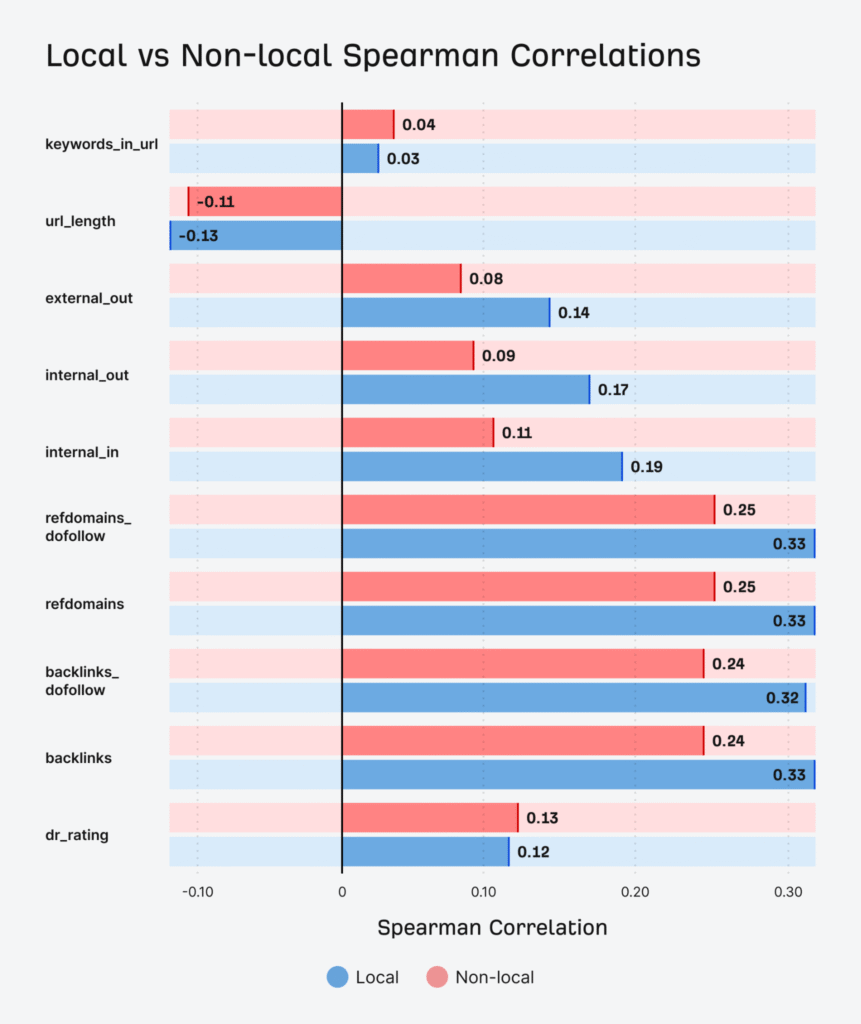
This link building study by Ahrefs reveals that links and search results showed a correlation of 0.33 for local queries, a much higher figure than that seen in analyses from previous years (Spearman statistics).
Because the content on local service businesses’ websites is very similar, links are a good differentiator for determining which business has more local authority and popularity.
So link building for local SEO is more important now, in the age of artificial intelligence.
Zero-click search? Pew Research Center study
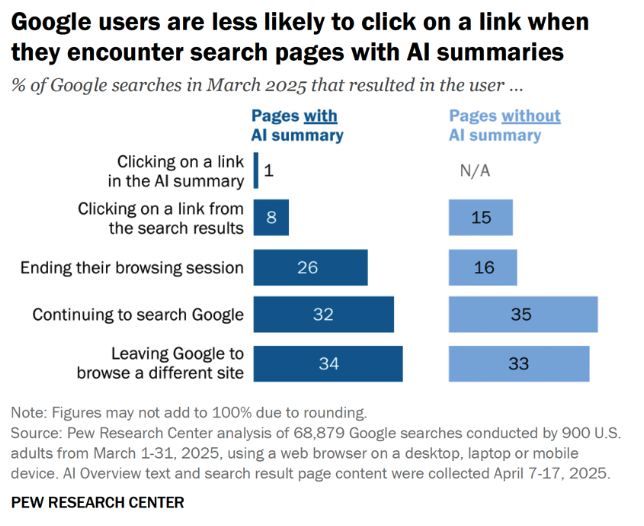
The Pew Research Center study from just a few months ago (spring 2025) shows that Google users are less likely to click on links when an AI summary appears in the results.
The report analysed the activity of 900 Google users and found that 58% saw at least one AI-generated summary. The study concluded that users click on results less often when an AI summary appears and that, in those cases, they rarely visit the cited sources.
They only click on links 1% of the time, which confirms the trend towards zero-click search.
What does Google say about it?
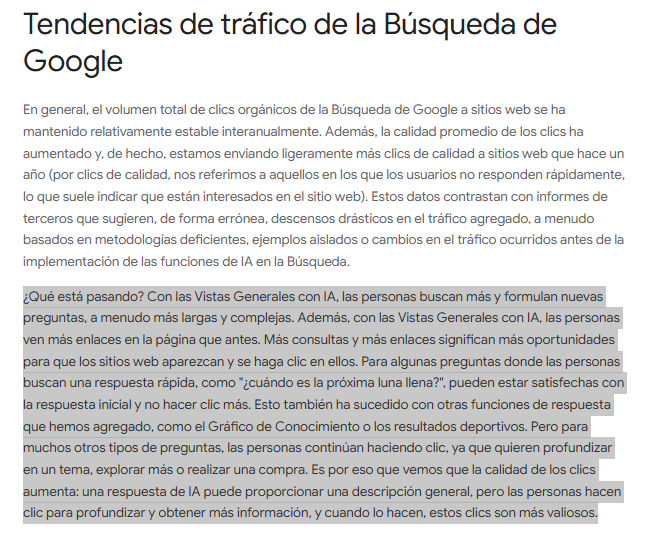
Google explains that AI in its search engine (AI Overviews) is leading users to make more queries, and better-quality ones, not fewer.
Although it acknowledges that there are now fewer clicks overall, it says that the clicks that do happen are of higher quality, because users only click when they really want to dig deeper, and that AI summaries include more visible links and attributions to encourage exploration of external content.
In practice, being cited in an AI summary does not guarantee a click, hence the drop in traffic that websites are experiencing.
The priority now must be to build brand authority, so as not to depend on direct clicks from AI answers.
How is the correlation between backlinks and AI measured?
To analyse the connection between a website’s backlinks and its visibility in AI, two metrics are used: Pearson and Spearman correlations.
- Pearson measures a linear relationship between two variables, when both rise or fall uniformly.
- Spearman detects non-linear relationships or “threshold” effects, where the correlation only appears after a certain point.
- Both give values between -1 and +1, indicating whether the relationship is positive, negative or non-existent. Comparing them shows whether the factors are directly related or only after certain levels are exceeded.
Link building is “NOT” dead
So, is link building dead? The answer is no. The metrics and data leave no room for doubt: links still correlate with visibility in AI environments.
Our own analysis matches the studies mentioned: AI, together with the evolution of algorithms, will shape how SEO and link building evolve.
While automation can support part of the work, it also demands higher-quality strategies to stay competitive and avoid penalties.
As big brands dominate the SERPs, small and medium-sized businesses will have to prioritise originality in their content, relationship building and brand authority.
At Getalink we know that building authority and relevance is the key to ranking on Google and, therefore, also to being cited by LLMs.
Request a quote for your backlink strategy
Shall we talk about your project?
Tell us what you need (full name, email, website, message) and we'll get back to you within 24 hours.
SendFrequently Asked Questions:
What kind of link building no longer works?
Mass or spammy link building is dead. Automated techniques or indiscriminate link exchanges no longer add value and can even lead to penalties.
What role does Digital PR play in link building today?
Digital PR is the natural evolution of link building: creating valuable content (studies, surveys, press releases) that attracts mentions and links from trusted publications, strengthening brand authority and reputation.
How does AI influence link strategy?
AI mainly cites authoritative sites with quality links. Appearing in its results does not guarantee clicks, but it does provide visibility. That is why the key today is to combine solid backlinks + brand reputation to stay relevant in the era of AI search.
What do the studies we have looked at in this article show?
- That sites with more quality links are more likely to be cited by AI systems.
- That backlinks still correlate with high positions on Google, which in turn makes it more likely to be a source for AI-generated answers.
- That link building is still relevant, although its methods must adapt to prioritise value, authority and topical relevance.
Does AI work the same way as Google Search?
AI does not work the same way as Google Search. Models such as Gemini or ChatGPT are large language models (LLMs) trained on huge volumes of text from the internet, wikis and forums.
When you ask them a question, they do not search the web directly; instead, they predict the most likely answer based on language patterns. That is why they can sometimes make up data or “hallucinate”.
Some more advanced systems, such as Google’s AI Overviews, Bing Chat or ChatGPT with browsing, use a technique called Retrieval-Augmented Generation (RAG). This allows the model to convert your query into a mathematical format, search for recent information and combine it with its prior knowledge to give a more accurate and up-to-date answer.
And… what does this have to do with links? Very simple: just as AI detects recent, well-ranked information, it also detects trustworthy, authoritative sources, many of which happen to coincide with the best-ranked pages with the most quality links.
That is why we can say that backlinks are still a key signal for AI models to identify which sites are relevant and worthy of being mentioned in their answers.