

Building links is pointless if they don't get indexed: for Google to take into account these trust signals that do so much for SEO rankings, they absolutely must be indexed.
In this article we explain how to get your backlinks indexed quickly, but first let's give you a little context.
What does “indexing a link” mean?
It's worth explaining the concepts of crawling and indexing because, although they are different processes, they are related, since together they allow your website to appear in search results.
Crawling is the process by which Google discovers and explores new web pages, following links to find content.
Indexing is the process of analysing and storing the content of those pages in Google's database (the index) so that they can be shown in search results.
When we talk about indexing a backlink, we mean that Google detects it, crawls it and adds it to its database so that it starts to count as a signal of authority pointing to your website.
Until that happens, the link brings no SEO benefit at all.
Why aren't backlinks getting indexed?
These are the main reasons why your backlinks aren't being indexed:
The page with the link isn't crawled often
If the domain you got the backlink from has a low crawl budget, Googlebot will hardly ever visit its pages. Google assigns a crawl budget to each site (the number of pages Google is willing to visit on your website within a given period of time).
If the domain isn't good (slow, with little authority and junk content), Googlebot will barely visit the site and, as a result, won't discover the links.
In other words, if a backlink sits on a domain that Google hardly crawls, the most likely outcome is that the link will never be indexed.
Low-quality content
If a page has low-quality content, such as irrelevant, poorly written or unreviewed AI-generated text, Google may decide not to index it. And if that page isn't indexed, neither are the backlinks it contains: they aren't recorded and they don't pass on authority.
Lack of internal links: backlinks aren't the only links that matter in SEO
As you know, good internal linking distributes authority within a site, signalling to Google which pages are important, which helps indexing.
If the domain linking to you has done a good job with its internal linking, all its pages, including the backlinks they contain, are more likely to be discovered (indexed) and valued by Google.
No relevant signal to alert Google
Google needs signals telling it that a page deserves to be crawled: for example, publishing or updating articles fairly frequently, traffic, social signals, etc.
If there's no activity, the search engine has no reason to visit the page and your link may end up ignored.
Priority given to valuable pages
Google gives preference to high-quality content. A cheap guest post on a barely relevant blog with dozens of outbound links doesn't carry as much weight as one on a relevant blog with no toxic links.
With that said, let's look at how we can get backlinks indexed.
How to index backlinks? 7 safe techniques
Getting links isn't enough, especially in highly competitive sectors: you need to make sure Google sees them and values them.
So… how do you index backlinks? Here are 7 proven techniques to get your links crawled and indexed by Google:
1. Make sure you get links with authority and relevance
To give your backlinks a better chance of being indexed, you should get links on sites with authority and relevance in your sector.
Google interprets topical relevance as a signal of trust and legitimacy, so it's much more effective to get links that fit naturally into the context of the content rather than forcing them in. The more sense the link makes within the text, the more likely it is to be crawled and indexed.
How do you get relevant links?
One example is analysing your competitors' backlinks. Identifying the sites they get links from will give you an idea of which media outlets or blogs in your sector accept collaborations.
These sites usually already have a good indexing track record, which makes it easier for your backlink to be detected quickly by Google too.
And… how do you get authoritative links?
Another way to get quality links is through Getalink, the international marketplace where you can buy backlinks through placements in media outlets or niche blogs.
Once you sign up, you'll see the filters (country, language, category, price, type of media) so you can choose from over 18,500 media outlets available in more than 30 languages. What's more, 250 deals with new media outlets are closed every week.
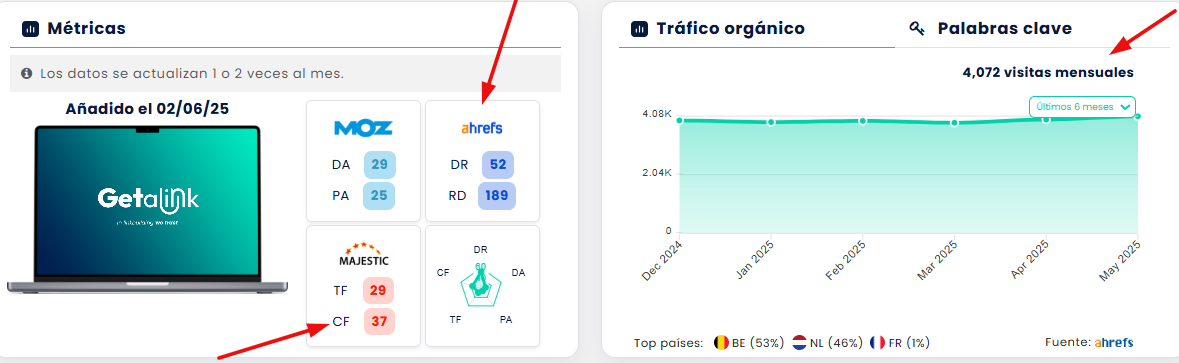
Once you select a media outlet, you'll see SEO metrics such as domain authority, referring domains, estimated traffic, the type of link allowed and link quality, as well as the number of links (according to Moz, Ahrefs, Majestic…), which will give you an idea of whether the outlet is right for your link building campaign.
Get started now2. Get links from pages that are already crawled
One of the most effective ways to make sure your backlinks get indexed is to place them on pages that are already indexed by Google.
Instead of trying to index links from irrelevant or low-quality pages, focus on getting backlinks from active, well-ranked sites.
For example, before getting a link, check whether the site appears in Google's index and whether it has organic traffic. And if the website hardly publishes any content, you're better off forgetting about it, as the link is very likely never to be discovered or valued.
3. Build Tier 2 links to index backlinks
Tier 2 links boost the pages where your main links (Tier 1) are placed. When you point Tier 2 links at a page that already contains a backlink, you're helping that page get indexed more easily.
As a result, the chances of Google giving value to your main backlink increase. It's a way to speed up indexing without relying directly on the link to your website, by optimising the context in which it's placed.
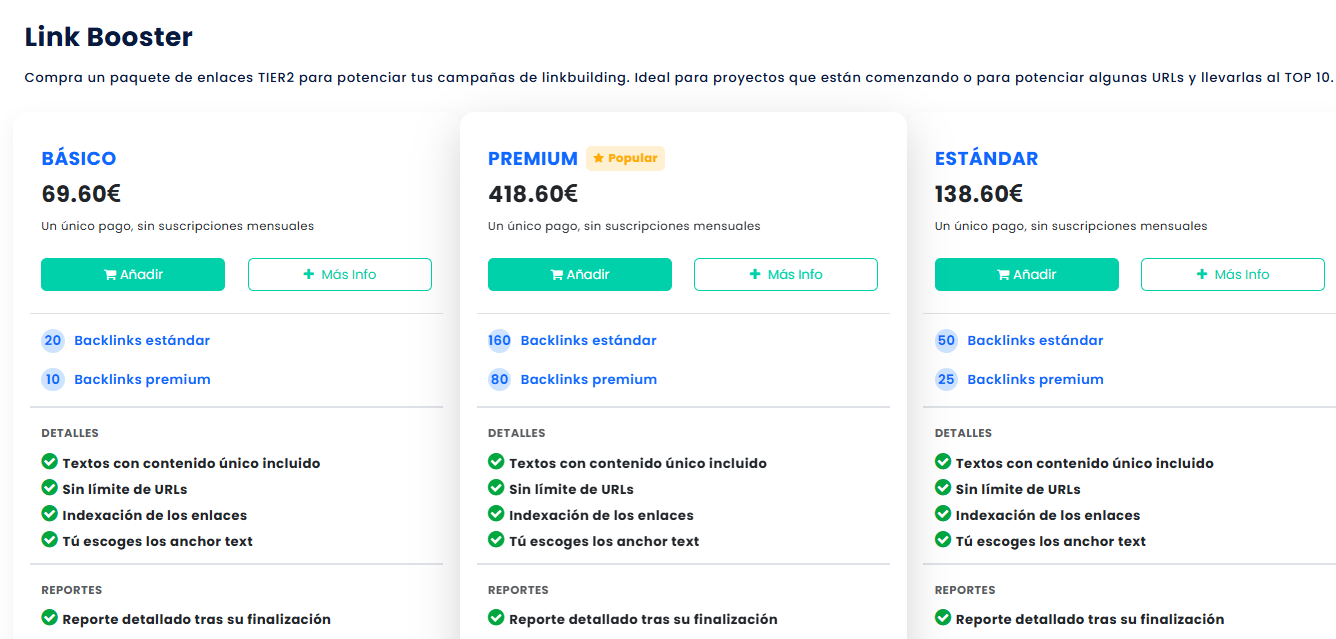
To improve your link building strategy, at Getalink we offer Tier 2 link packs from 69.90 euros that include 10 premium backlinks (links on quality sites) and 25 standard backlinks, with benefits such as:
- Unique content included
- No limit on URLs
- Link indexing
- You choose the anchor texts
- METRICS: Domain Rating, ahrefs.com 20+
- Detailed report on completion
4. Submit to Google Search Console
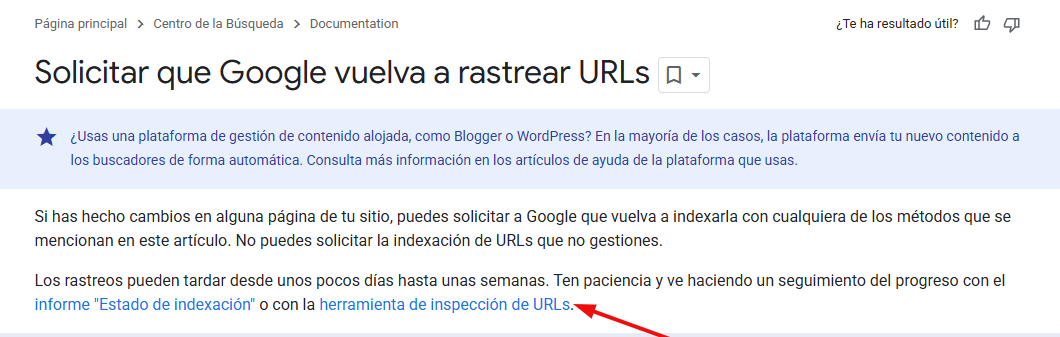
Another way to index backlinks is to force indexing through Google Search Console. To do this, log in to your account and, in the “URL inspection” option, paste the URL containing the link you want Google to index and click request indexing.
This sends a crawl request that usually triggers a visit to your website within 24 to 72 hours.
5. Share the backlink on social media to help indexing
Yes, it still works! Although Google doesn't use social media as a direct ranking signal, it does actively crawl platforms such as X (Twitter), Facebook or Pinterest because of the huge amount of content they generate.
This means that if you share your link on social media, there's a better chance that Google will discover it quickly.
How should you do it? Not just any old way. For example, share an article from your blog on X from an account that, if it isn't your own, looks real and has some content and followers.
Write a post with a bit of context; don't just drop the link on its own. Add relevant hashtags for the topic and encourage interaction (likes, comments, shares…). The more engagement the post generates, the faster the URL where your link sits will be crawled.
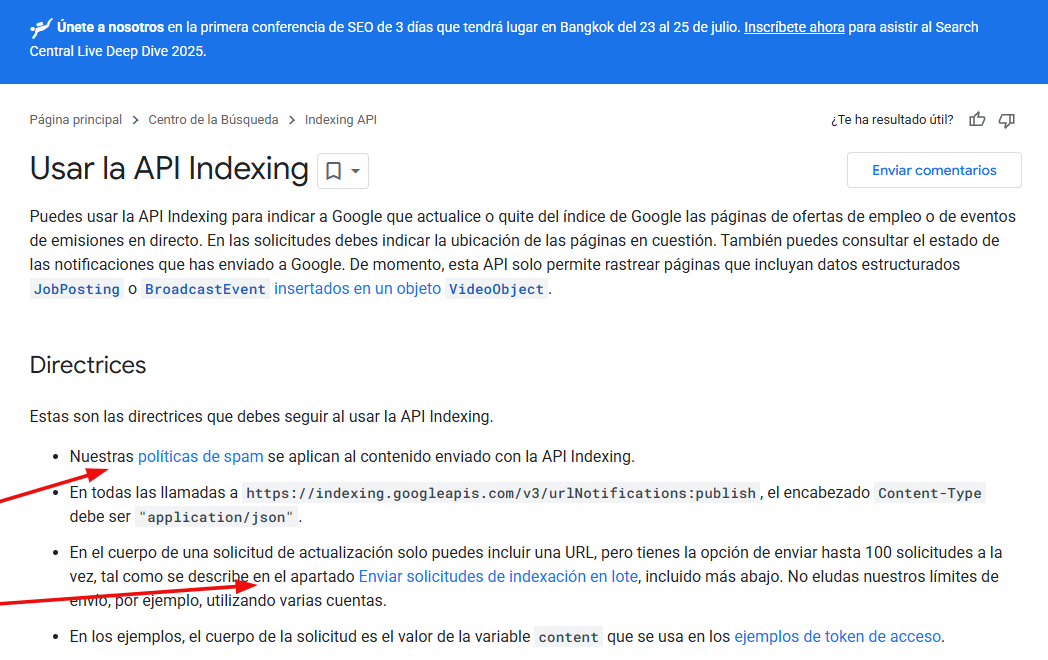
6. The Google Indexing API
Although officially, according to Google's documentation, the Google Indexing API is intended only for pages with Job Posting or Broadcast Event (live video streams) structured data, in practice it can be used with any type of page.
When you submit URLs this way, pages are usually crawled within minutes and indexed within a few hours (1–12 h).
If you have access to the page where the backlink is, use this API to force indexing, without penalties.
7. Ping your backlink URLs
There are tools for indexing backlinks quickly. These platforms usually use the Google Indexing API, and the free ones include Ping-O-Matic, Pingler, TotalPing…
Some premium ones: Indexceptional, Omega Indexer, SpeedLinks VIP, IndexInject / IndexMeNow, Link Centaur…
These tools increase the chances of Google crawling and indexing your backlinks faster, triggering different signals that push the URL onto Googlebot's radar. Perfect for links that are hard to move by natural means.
What no longer works for indexing backlinks
Ping tools on their own: if the content where your backlink sits is low quality, sending pings won't do any good. Google doesn't crawl or index worthless pages, however much you insist.
Social bookmarking: it was useful once, but today it's practically dead. Google no longer gives it any weight, and John Mueller himself (Webmaster Trends Analyst at Google) confirmed some time ago that this technique is obsolete and has no real impact on indexing.
How to check whether a backlink is indexed
To check whether a backlink is indexed by Google, you can use the URL inspection tool in Google Search Console or search for the backlink URL directly on Google with the site:[URL] command.
If the page with the backlink appears in the search results, it means it's indexed.
You can also use SEO tools such as Ahrefs or Semrush to analyse your backlink profile and check its indexing status.
How long does it take for backlinks to be indexed?
The time it takes Google to index a backlink varies greatly depending on multiple factors, such as the site's authority and the quality of the content, among others.
Normally, most quality links are indexed within 3–7 days, but they can take up to several weeks.
| Type of referring page | Typical indexing time |
| Heavily crawled sites (high authority) | Hours – days |
| Mid-sized sites | 3 – 14 days |
| Rarely crawled sites (low quality) | Weeks – 1 to 3 months |
Tracking link indexing
You can do quarterly tracking using Google Search Console and check your active links as well as any indexing errors.
SEO tools such as IndexCheckr, Scrapebox or URL Profiler let you check in bulk whether the pages with your backlinks are indexed.
You can organise all this information in a spreadsheet where you keep track of each link, with data such as the URL, creation date, tier (Tier 1 or 2), indexing status and the method used (guest post, press…)
This system not only gives you a clear view of the status of your links, but also helps you spot useful patterns to improve your strategy.
That way you can find out which sites get indexed fastest, which indexing methods work best and which types of content or anchor text are most successful at being crawled by Google.
And don't forget that, as always, backlink quality counts for much more than quantity. So request your quote now and start getting links that actually get indexed for your website.
Request a quote for your backlink strategy
Shall we talk about your project?
Tell us what you need (full name, email, website, message) and we'll get back to you within 24 hours.
Send