

In traditional SEO, .gov backlinks (government domains) are considered “the jewel in the crown” of backlinks. Getting an inbound link from a .gov website is like finding treasure. These backlinks stand out because they come from high-authority, highly trusted sites, which boosts your website’s SEO rankings. And no, this strategy is not outdated, let alone dead.
That’s why in this guide we’ll explain what they are, why they matter so much and how to get .gov links using advanced strategies and techniques. Stay with us, because we’re getting started!
What are .gov backlinks?
“.gov” domains are government-use domains belonging to the United States government. For example, institutions such as the Department of State (state.gov) or the FBI (fbi.gov).
As a fact, according to the US General Services Administration, in 2014 there were fewer than 6,000 active .gov domains, and only around 25% of them belonged to the federal government; the rest belonged to regional and local government bodies. This shows that the range of .gov sites includes city councils, state governments, local public bodies and so on, from which you can obtain links.
.gov links are backlinks that come from these government websites. They carry great authority, which makes Google perceive them as powerful signals of credibility, so they are considered among the most valuable within a link building strategy.
Why are .gov backlinks so valuable for SEO?
.gov links have a very positive impact on SEO, and here’s why:
- They are “the good kind” of links: .gov backlinks are valuable for SEO because, in Google’s eyes, they are very “clean” links: they don’t come from link farms, spam or automated content, but from public institutions. That makes them legitimate and they work as a trust signal. That’s why a single .gov backlink can have more impact than dozens of low-quality links, as Google interprets them as signals of genuine credibility and authority.
- They come from authoritative sites: .gov sites publish content to fulfil public missions, not to “do SEO”. If they link to you, Google interprets it as a vote, as if your site were an expert: “this source explains it better or more thoroughly”, and the backlink transfers part of that credibility and authority to your website.
- Supply and demand: Very few .gov pages link to external resources, which gives each link even greater weight.
- Syndication effect: A .gov link can spread to other official portals through internal syndication (agencies, branch offices, programmes), generating extra mentions.
- The environment reinforces the value of the link: .gov links live in a very good, clean environment, with no spam, affiliates or ads, so that ultra-trustworthy context increases the SEO value of the backlink and reinforces your website’s authority.
Ten strategies to get .gov links
These are 10 of the best actions to obtain government links. Each strategy is based on understanding what public agencies need and how our content can fit into their goals.
1. Create useful guides that complement .gov sites
Government sites are full of outdated pages, PDFs and complicated texts. This is a golden opportunity to earn links. So you can create information assets that make life easier for government staff and users. For example, safety guides, disaster checklists, licensing instructions, procedures, public grants, tax resources, etc.
The key is to present your resource as an improved version of something the agency already references, so that the .gov website links to you.
You can also scale the reach of the resource by adapting it to different states and municipalities, which can open the door to hundreds of quality .gov links.
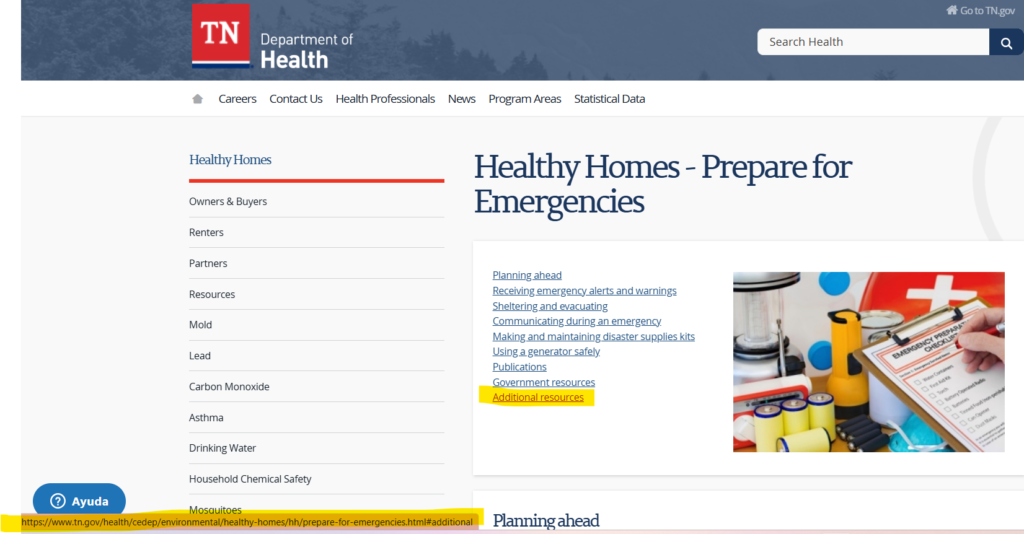
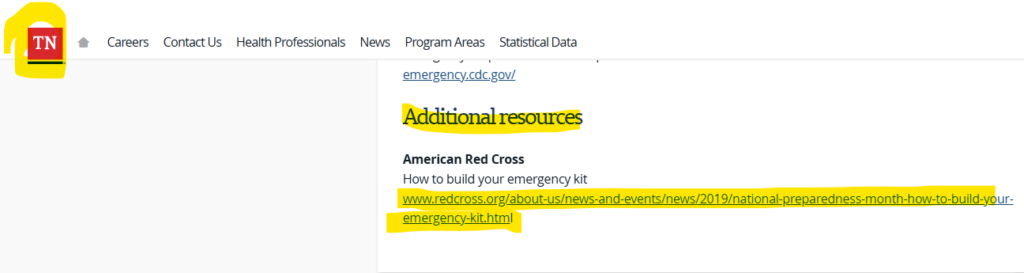
For example, as you can see in the images, the Tennessee Department of Health (tn.gov) has a guide called “Healthy Homes – Prepare for Emergencies” that includes an “Additional resources” section linking to an American Red Cross article (“How to build your emergency kit”).
2. Make use of FOIA data
FOIA (Freedom of Information Act) is a US freedom of information law that allows anyone to request public documents, data and reports from the government. Through FOIA you can obtain exclusive, official data that you can publish in a clearer, more digestible way.
So if you publish a report with data obtained via FOIA, .gov sites may end up linking to you when referencing that report, thus earning government backlinks.
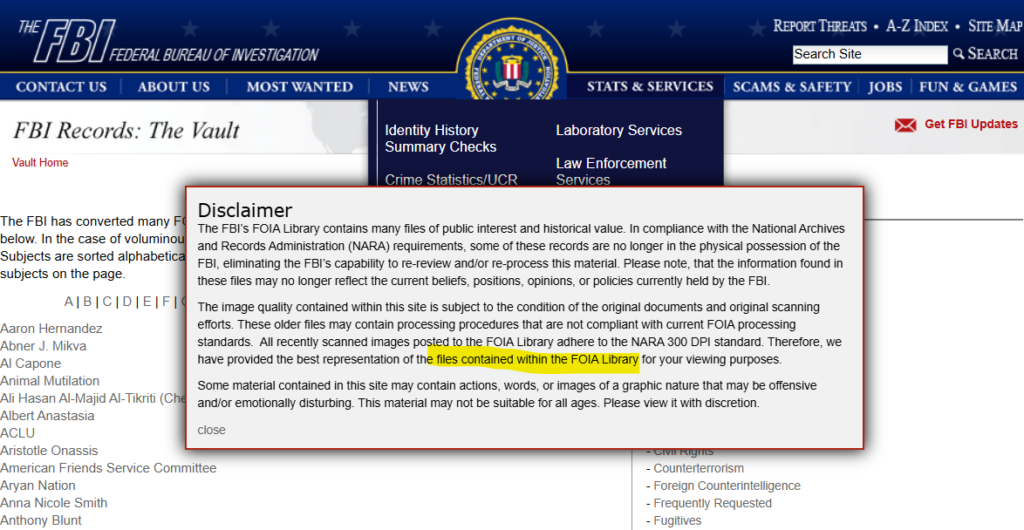
For example, the screenshot shows how The Vault (the FBI’s FOIA library) explains that it makes files available to the public as searchable documents. If you analyse those documents and publish a useful report with key data or a summary of findings, other .gov sites may link to you, earning you legitimate .gov backlinks.
3. Offer plain-language legislative guides to get .gov backlinks
When the government passes new laws or regulations, it is obliged to publish information about them, but rarely does so in language the ordinary citizen can understand. This is where you can earn .gov links, because you can create a guide to those laws that is well explained and written in plain language.
For example, if a new environmental regulation comes out, what you can publish is a step-by-step explanation of the obligations or a summary of the penalties for non-compliance, so that businesses or individuals can check their compliance.
Because you add value and reduce calls and complaints, easing the workload of administrative staff, there is a greater chance they will link to your guide, and so you can earn a .gob.es link.
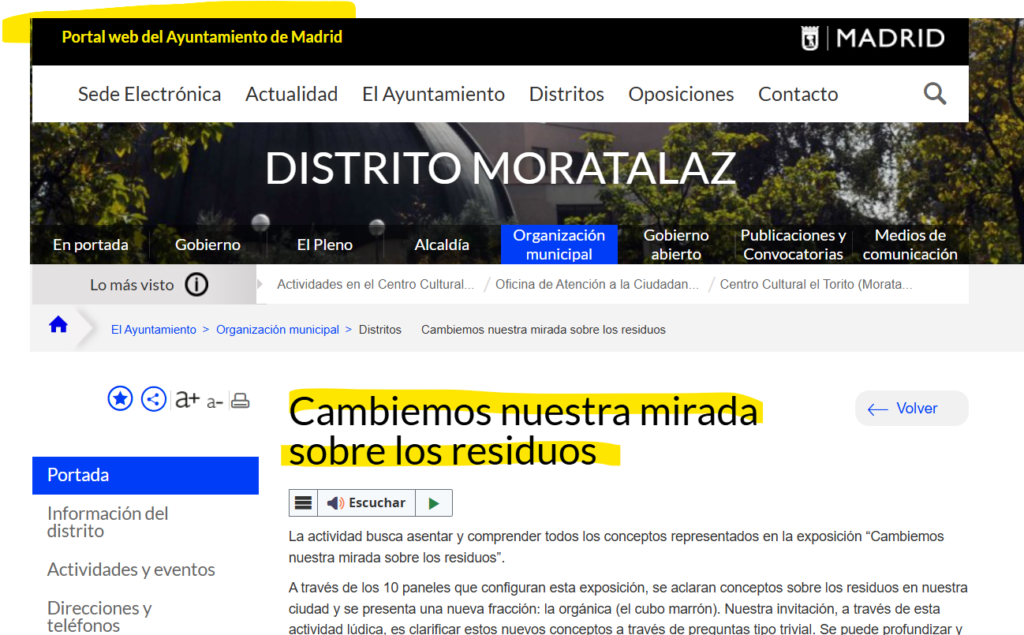
These example screenshots show how the Madrid City Council website links to an Ecoembes resource on “Recycling data in Spain”.
4. Develop resources and get .gob.es links
In the same way as the previous point, you can create resources with easy-to-understand information, so that state bodies find them useful and include them on their official page.
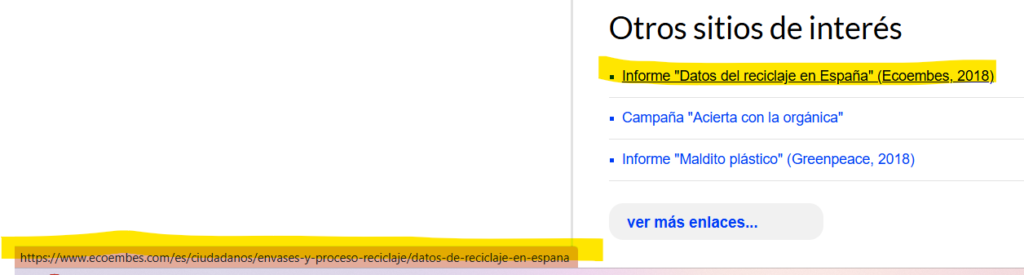
In this example the links are .gob.es, as we can see in the image: the Spanish Ministry of Health, on its “Patient Safety” page, links to and recommends external sources such as FAD – Fundación Avedis Donabedian (whose aim is to improve the quality of healthcare services).
5. Create emergency resources
Create resources such as smoke and wildfire maps, evacuation routes in case of emergency, or checklists for states of alarm such as floods, as emergency departments need clear, up-to-date and easy tools to inform the public in these situations.
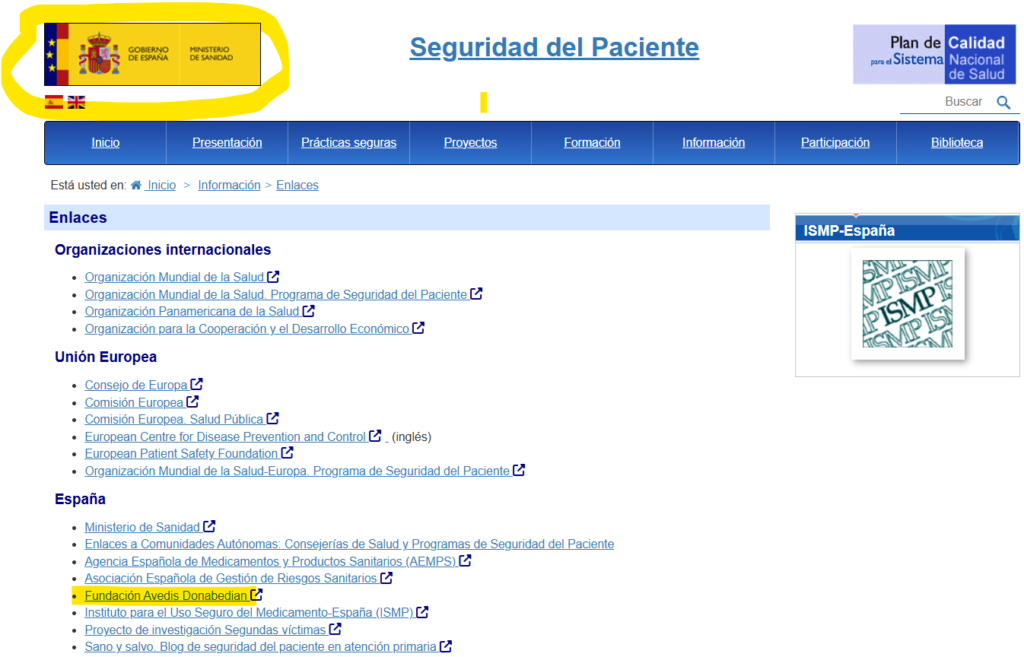
For example, on datos.gob.es (the Spanish Government’s official open data portal) there is the option “Wildfires in real time”, which shows an external link to “La Gistería (a site dedicated to geographic information for tourism, environmental and research projects)” via the “Go to website” button. Thus earning a government link.
6. Produce content for local economic development
Public economic development offices (trade, SME support, regional agencies, etc.) look for and share useful external resources (guides, tools, studies, training) that help businesses and entrepreneurs.
If you create practical material such as a “Cybersecurity guide for SMEs” or a “Digital internationalisation handbook”, they may be more willing to link to you. What’s more, a good resource can be replicated across several institutional websites in the same area.
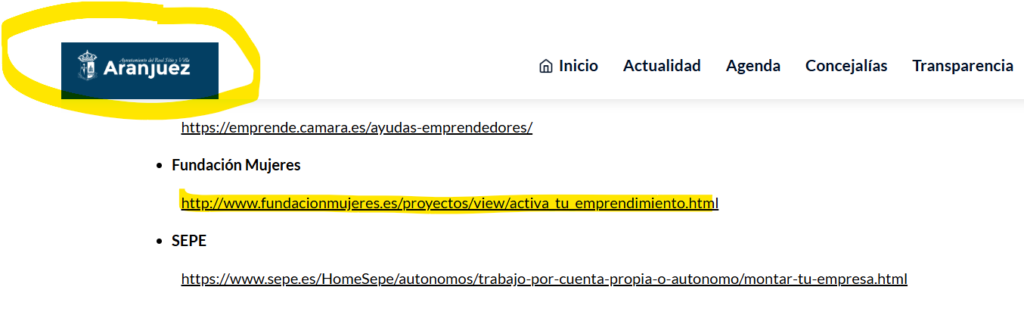
For example, on the “Entrepreneur support service” page of Aranjuez City Council, they include a list of resources and link to Fundación Mujeres (a private organisation).
7. Collaborate on government projects
This strategy for getting .gov links is about collaborating on public initiatives that the administration wants to move forward but cannot always do so due to a lack of resources.
You can provide support (funding or work) for campaigns such as road safety, youth programmes, environmental clean-ups, translations, etc. In return, the agency commonly acknowledges you publicly with a link on its website.
It works well because you offer a solution; they also see you as an ally and expert (design, development, copywriting, data), not as someone doing link building, and the resulting backlink is legitimate and natural.
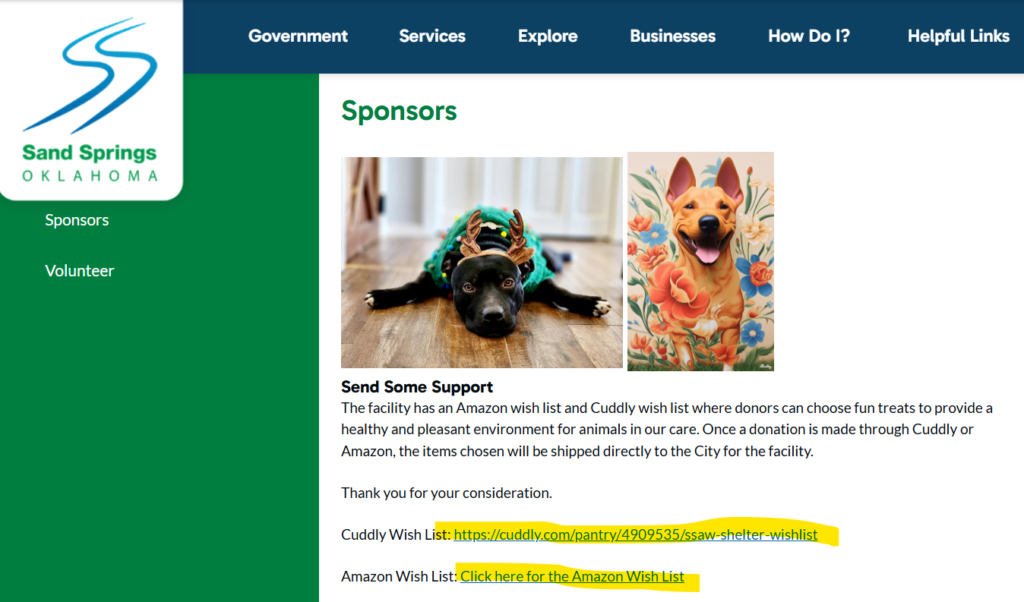
On the official website of the City of Sand Springs (Oklahoma), there is a page titled “Sponsors” (Animal Welfare Department), where the agency links to external sources related to the programme, such as a direct link to the Cuddly Wish List (cuddly.com) and another to an Amazon Wish List (amazon.com).
8. Create interactive data dashboards
The public sector has data to spare (reports, statistics) but lacks the capacity to present it clearly. You can take advantage of this to create interactive dashboards that turn public data into easy-to-understand visualisations, such as pollution maps by area, budgets by item, comparisons of educational results, etc. And as it is an external resource, public bodies may link to it, earning you a quality .gob.es link.
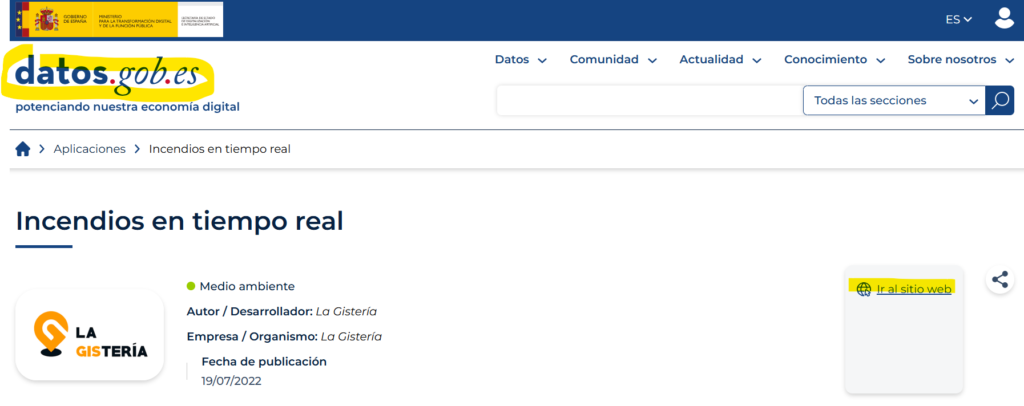
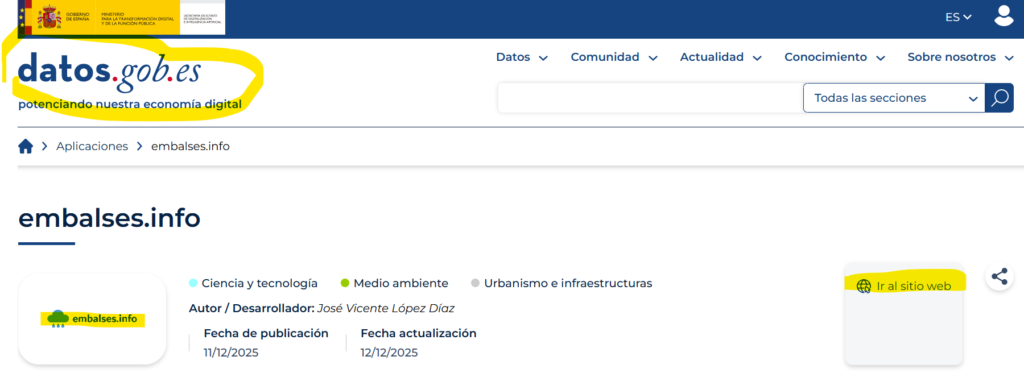
For example, on the official portal datos.gob.es, there is a “Go to website” button linking to embalses.info, an external non-governmental backlink.
9. Checklists on topics such as the environment, health and accessibility
On sensitive topics (public health, accessibility, grants...), official websites are still very technical and lengthy. If you publish helpful content in the form of checklists, you will be providing clear information that reduces errors and doubts. This will make it easier for you to earn a .gob.es link.
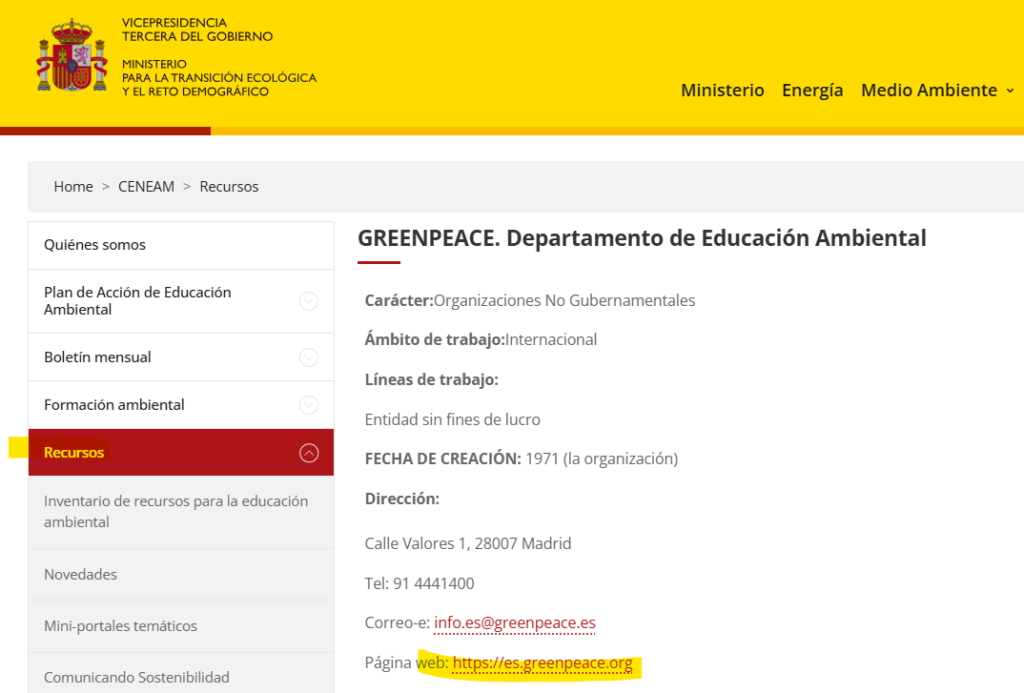
One example is the website of the National Centre for Environmental Education – CENEAM (MITECO), where the public body includes a link to the Greenpeace website within its environmental education resources section. These kinds of links are common in sensitive areas such as the environment, education or health, where the administration prioritises offering citizens useful and reliable resources, even if they are not its own.
10. Replace broken .gov backlinks with your content
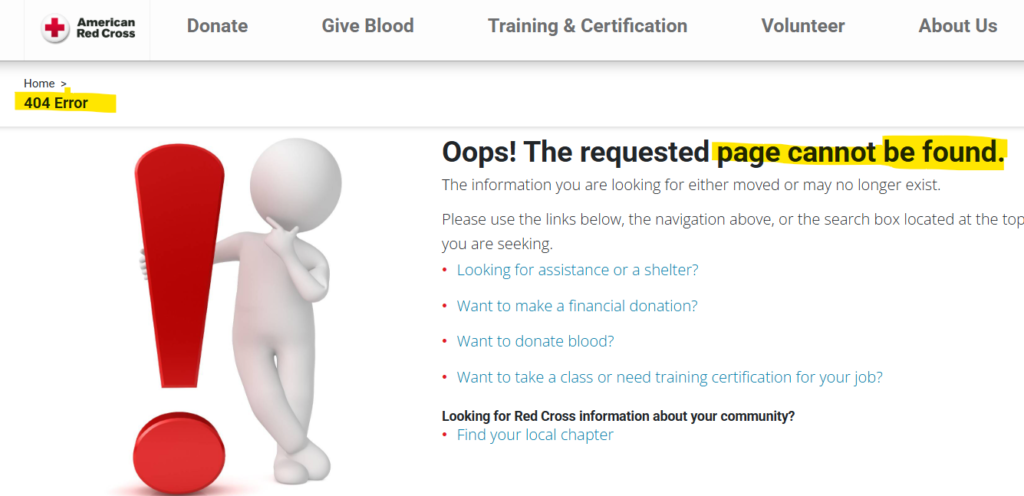
On government pages it is common to find links to external resources that have disappeared or changed URL over time. When the user clicks, they land on a 404 error.
Notifying the institution of this editorial error and suggesting an updated resource as a replacement helps improve public information, and it is a legitimate way to get .gov backlinks
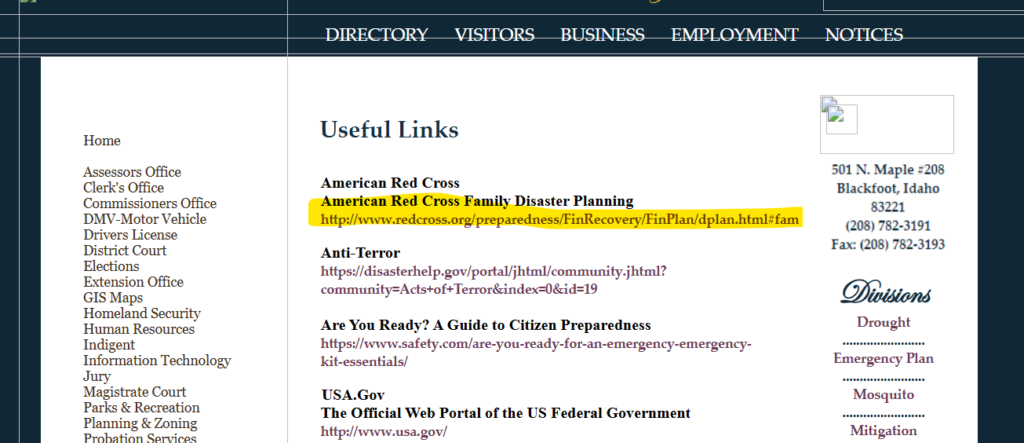
For example, on the official Bingham County page (web.binghamid.gov), the agency links to an external American Red Cross resource on “Family disaster planning”. When you open that URL, RedCross returns a 404 Not Found.
How to find .gov backlink or .gob.es link opportunities?
You can search for them by level of government: local, regional and state/national. The higher the level, the more authority… and the more difficulty.
Local links (city councils):
Start with local authorities, as they promote local businesses in directories, entrepreneurship pages, shop listings and coworking spaces. Look on the council website for sections such as “business directory”, “local development” or “entrepreneurship” and ask to be included, since you provide services in that area.
Regional backlinks (autonomous communities):
Regional government departments have more comprehensive websites with resource pages, SME programmes, grants, training, internationalisation or news where they mention and link to initiatives.
National, state-level links:
You will need to identify the exact section and follow up to find the person in charge.
- Official programmes and calls (grants, acceleration, digitalisation, training).
- Awards and recognitions (if you are selected or win, they publish it on their website, so they will link to yours and you will earn a .gob.es link
- Resource pages and directories of national bodies.
The importance of .gov links now in the age of AI
Google trusts links from sites with verified authority, such as recognised media outlets and official bodies with a .gov domain.
These backlinks increase the likelihood of your content gaining greater AI visibility and in LLMs such as AI Overviews, Perplexity, Gemini, ChatGPT, etc.
Given the effort and time it takes to get these .gov backlinks, it is advisable to rely on a link building agency to help you improve and diversify your link profile. At Getalink you can find high-authority media and backlink opportunities to see results without compromising on quality.
Frequently asked questions about how to get .gov and .gob.es backlinks
What does Google think of .gov backlinks?
Google pretends that the TLD (.gov) doesn’t matter, but it does reward the sites that have them. That’s because they are “cleaner”, scarce links coming from non-commercial environments, which reinforces trust. That’s why a single .gov backlink can have more impact than many mediocre links. Google doesn’t emphasise this to prevent people from trying to force this type of link.
What does .gov mean in a link?
The .gov TLD indicates that the link comes from an official government website. These domains are reserved for public institutions, so they tend to inspire trust and have little spam.
How to get .gov or .gob.es links?
To get .gov or .gob.es links you need to provide value: you can create high-quality resources (guides, tools, data or reports), propose your website as a recommended resource on institutional pages, take part or collaborate in official projects (where they usually link to collaborators) and find pages with broken links and offer a replacement with improved content.
How many .gov links do you really need?
You don’t need many; a few genuine .gov links can make a difference:
- 1 good .gov link can improve the rankings of a URL.
- 3–5 can strengthen several service pages.
- 10–20 can raise domain authority if they are well placed.