
In SEO and link building, authority is one of the most widely used metrics for developing an effective strategy. Among the most popular indicators are Ahrefs' Domain Rating (DR) and Moz's Domain Authority (DA).
Both are metrics created by these SEO tools to estimate the authority of a domain, but they work differently and offer different perspectives.
Although DR and DA are often mentioned together, it is important to understand:
- The differences between Domain Rating (DR) and Domain Authority (DA).
- What each one measures.
- How to interpret them when doing link building.
We explain it all in this article!
DR and DA: Domain Rating vs. Domain Authority
Both are metrics provided by third-party SEO tools:
DR (Domain Rating) is the Ahrefs metric that reflects the strength of a site's backlink profile, that is, how many unique domains link to it, how strong those links are and how often they are generated. It is the metric used to decide whether a link is worth getting from that domain.
DA (Domain Authority) is a metric (score) from Moz that predicts how likely a website is to rank on search engine results pages (SERPs).
DA does not only analyse links; it also takes into account aspects such as the age of the site, the speed at which links are acquired and the spam score.
How is Ahrefs' DR (Domain Rating) calculated?
Ahrefs' Domain Rating (DR) is a metric based solely on the link profile of a website. It does not take into account traffic, content quality or any on-page SEO factor. It only analyses backlinks and measures:
- The number of unique referring domains pointing to the site.
- The authority (DR) of those referring domains.
- How many other sites those same domains link to (which dilutes or concentrates authority).
It is based on a scale from 0 to 100, where 100 represents maximum authority.
Can DR be manipulated?
Since DR depends only on links, it is a metric that can be manipulated, for example:
By carrying out chain link exchanges (A > B > C), which give the appearance of clean links from domains with a good DR.
Renting links on the homepages of high-DR sites that have no traffic or topical relevance.
Automated link spam tools, such as mass-generation software that still circulates on black hat forums. See SEO Autopilot, among others.
How is Moz's DA (Domain Authority) calculated?
Moz's Domain Authority (DA) is a more complex metric that predicts a domain's ability to rank in search results (SERPs). It is calculated on the basis of multiple SEO factors, not just backlinks:
- Referring domains: The unique domains linking to the site.
- Total number of backlinks: the total number of inbound links.
- Link quality: Assesses the authority of the linking pages, according to Moz's system.
- Spam score: Measures the risk of a site using suspicious or unnatural techniques.
- Traffic trends and search visibility: Analyses whether the site receives visits and appears on Google in a stable or growing way.
It is a metric expressed as a numerical value from 1 to 100 and should not be confused with Page Authority (PA), since the latter refers to a specific page, whereas DA refers to the entire website.

DA can also be manipulated
Although it is a more comprehensive metric than DR, it can also be manipulated, for example:
With fake traffic: Traffic is sent from bots or proxies to simulate visibility and fool Moz.
Expired domains: Old domains with historical links are reused to maintain a high DA.
Why are DR and DA important metrics for SEO?
Although DR and DA are not official Google metrics, they are useful for measuring a site's authority and its ability to compete in search results.
They allow you to:
- Spot link opportunities to improve your organic visibility.
- Compare your site with your competitors'.
- Make strategic decisions before doing link building.
For example, if your competitors have a higher DA, they probably have better links or better-executed SEO, which will help you adjust your own strategies. Let's take a look:
Spot link opportunities
DR and DA work as initial filters to prioritise backlink opportunities. For example, you can rule out low-authority sites and then refine your selection by assessing organic traffic and topical relevance. After all, there are sometimes good opportunities to get links on low-authority sites.
Suppose you are analysing sites that link to a competitor in the online casino sector, and one of them has a DA of only 19 but gets 3,000 monthly visits. If you keep analysing, you see that it publishes specialist content on the topic, such as responsible gambling. So, although its authority is a little low, its traffic and aligned topic make it a good site for getting a quality link.
Compare your site with your competitors'
Using these metrics to compare your site with your competitors' will allow you to analyse the state of your link profile against theirs.
For example:
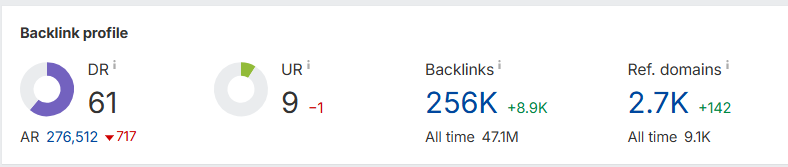
If your site has a DR of 25 and your competitors have a DR of 60+ and more than 2.7K referring domains, you know you will need to get quality links to match and try to improve that authority and trust in your site.
Make strategic decisions before doing link building
Before investing time and resources, analyse the sector you are up against. To do so, you can take the top 10 results on Google for the keyword that generates the most business for you.
For example: “sports betting”.
- If you see an average DR of 75+.
- Referring domains are around 1,500.
- And the average traffic per page: 27,666 monthly visits.
You are clearly dealing with a highly competitive niche, with a powerful backlink strategy behind it. You will need to design a phased link building campaign, knowing that it will require time, quality content and investment in links.
How to check a domain's DR and DA?
You can use hundreds of SEO tools; to explain it, we will stick with the same example of Ahrefs and Moz:
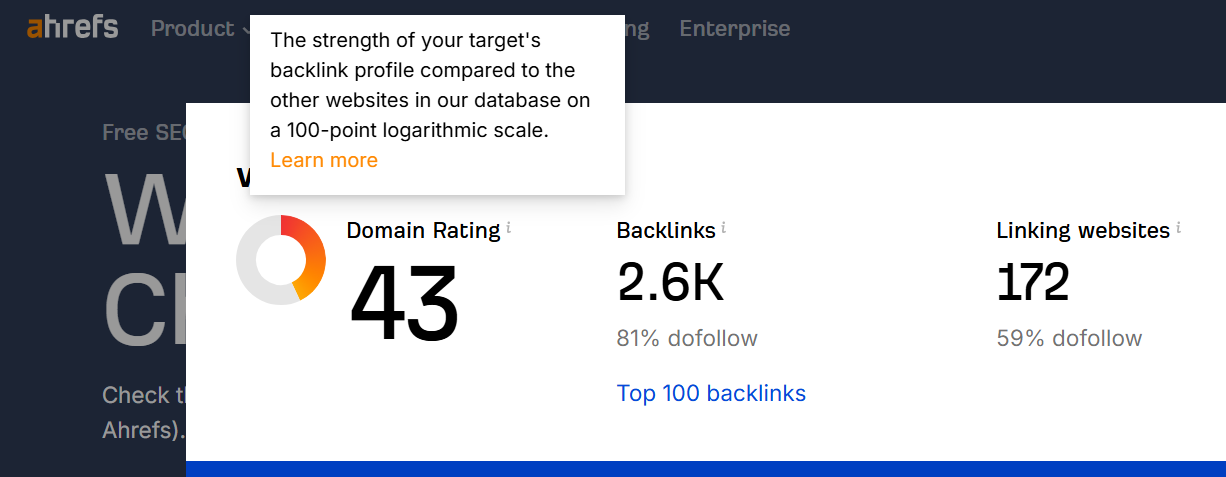
Ahrefs (free): Website Authority Checker, DR
Go to the “Website Authority Checker”: Website Authority Checker
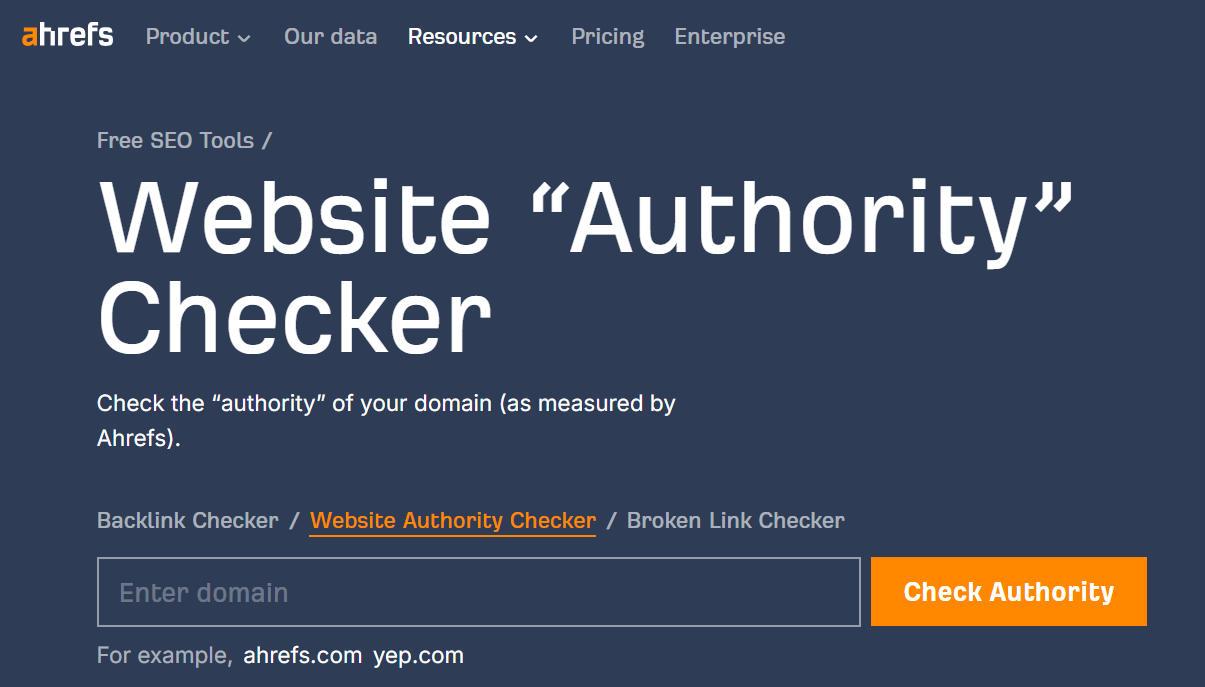
Enter your domain and you will be able to check the DR, backlinks (dofollow percentage) and referring domains.
Moz: Free Domain Authority Checker, DA
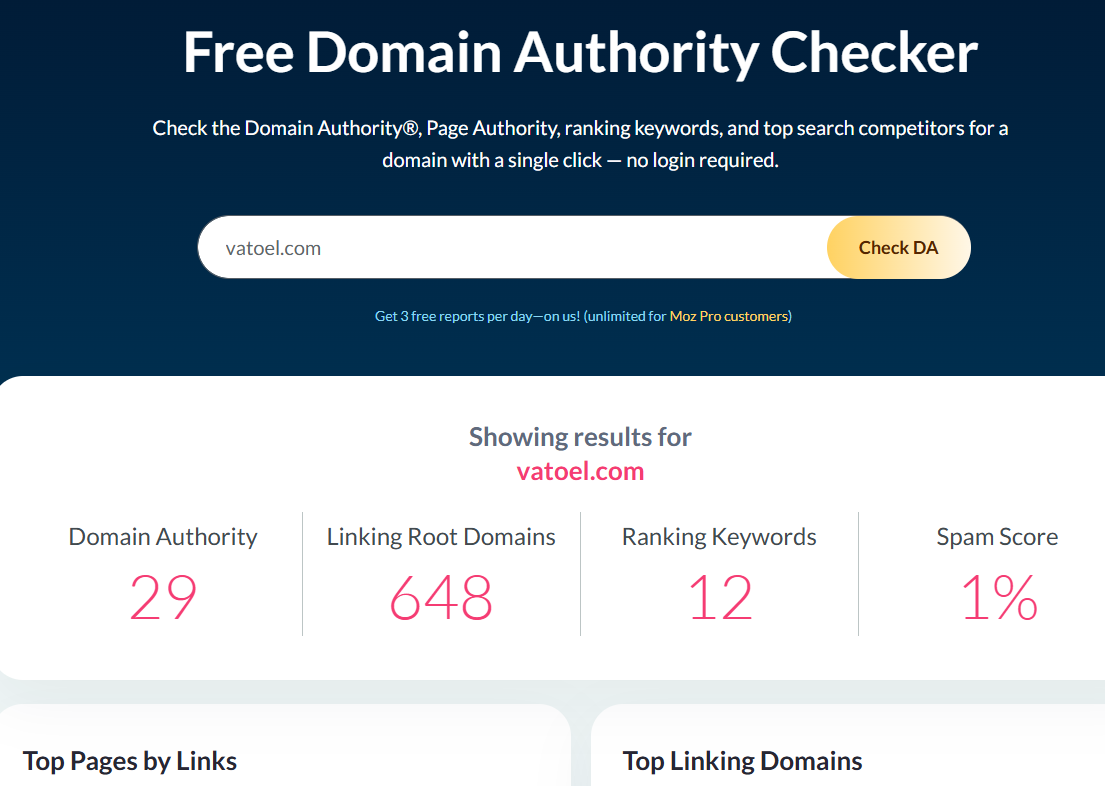
Go to Moz's free domain analysis tool: Free Domain Authority Checker
Enter your domain, click analyse and you will see information on: DA, referring domains, top pages by links, spam score and keywords.
How to increase a domain's DR and DA, rating and authority?
To improve your DR and DA scores, you need to get quality links. Through effective link building campaigns you will increase your domain's authority.
Other SEO aspects that have an influence are:
- Domain age: Older sites tend to have greater authority.
- Social signals: Engagement on social media helps improve the site's trust and authority.
- Quality content: Publishing useful, up-to-date content has a positive influence.
- On-page SEO and technical SEO: Improving both technical and on-page SEO aspects will provide a good foundation.
Beyond DR and DA: what should you look at when buying links?
Ideally, you should get quality links from relevant sites, not only assessing DR and DA (authority), but also taking into account factors such as:
Organic traffic: Not just the figure, but whether the trend is stable or growing (not penalised, not declining).
Related or complementary topic: Links from sites in the same niche have more relevance and context.
Content quality: Does the site rank for relevant keywords in your niche? A link within a useful, well-written article with semantic context is far more valuable than one shoehorned in.
Link quality of the referring domain: Also analyse who links to the site that links to you, and whether those links make sense or are manipulated.
Indexing and domain visibility: If the site is not indexed on Google, its DR will not pass authority. To check, use the command “site:domain.com” and, if the domain is indexed, the search engine will show the results for that domain's indexed pages.
Trust Getalink to acquire quality links
You can trust Getalink to buy reliable links, as the marketplace not only tells you the Ahrefs DR and Moz DA of the selected media outlet or blog, but also offers you metrics such as:
Get started now- Majestic Trust Flow (TF): Measures the quality of inbound links based on their proximity to trusted sites. A high TF indicates more reliable and relevant links.
- Majestic Citation Flow (CF): Assesses the number of links pointing to the site, regardless of their quality. A high CF with a low TF may indicate low-authority links.
- Organic traffic trend: Analyses whether the site's traffic is stable or growing. A downward trend may indicate penalties or loss of visibility.
- Keywords in the top 10: See how many keywords the media outlet ranks for in the top 10, which shows its real relevance in the niche and its ability to attract qualified traffic.
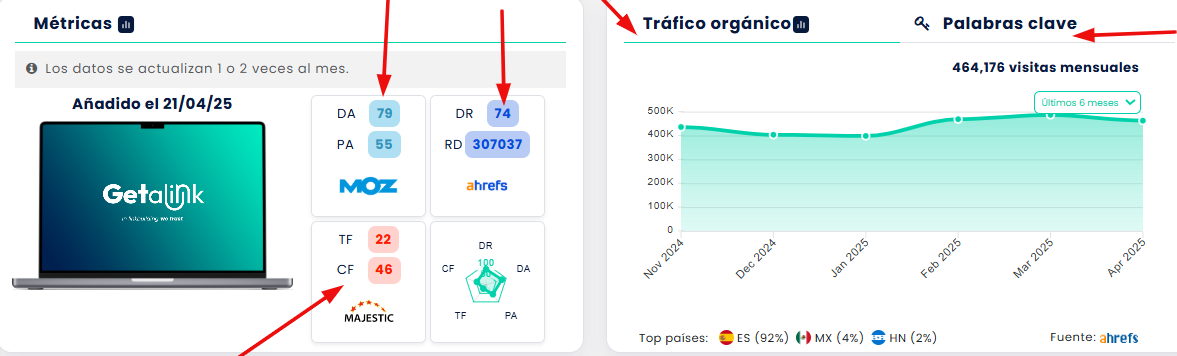
All this information is very useful when buying quality links.
Request a quote for your backlink strategy
Shall we talk about your project?
Tell us what you need (full name, email, website, message) and we'll get back to you within 24 hours.
Send