

If affiliate SEO is defined as optimising an affiliate website to improve its visibility in search results, then link building for affiliates could be defined as building links in order to improve the site's authority and trust, and therefore its earnings.
The goal is to attract qualified organic traffic that, by clicking on the links in your articles, reviews or comparisons, ends up generating commissions.
That is why getting links for affiliate websites is essential if you want to increase revenue in such a competitive sector.
In this article we explain how to do effective link building for affiliate websites.
How to do link building for affiliates?
Before building a link for an affiliate website, we need to analyse which pages deliver the highest ROI (return on investment). The goal is not just traffic, but also a quick return that allows for greater growth and revenue.
Which pages should you build links to?
Start with the pages with the most earning potential. In other words, choose pages close to the top 3 for commercial searches, calculate what they could generate and get links to them.
For example, imagine you have a tech affiliate site and an article titled “Best laptop for students” that ranks in position 12 on Google.
This search gets around 5,000 visits a month, so if you get your article into the top 3, it could earn around 15 sales a month. With an average commission of 10 euros per laptop sold, you would earn around 150 euros a month from that article alone.
You can calculate it using these formulas:
1. Estimated monthly revenue: Search volume × CTR (clicks that reach your site) × conversion rate × average commission
2. ROI (Return on investment): (Estimated revenue – SEO investment) ÷ SEO investment × 100
To achieve this rise you will need to invest in links, for example around 300 euros.
At first you lose money, because you spend more than you take in. But if the article reaches the top 3 within a couple of months, you will start receiving that €150 a month on a steady basis, recovering your investment and generating profit.
A strategic approach for affiliate websites
On niche sites, the ideal is to boost the pages with the highest purchase intent (reviews, “best whatever” comparisons), especially if they are already close to the top 10. With a few good-quality links, they can climb quickly and start generating sales.
For example: a site about coffee makers with an article “Best moka pot 2025”.
On authority sites, what works best is strengthening category pages or topic pillars. This makes the domain gain overall relevance and rank for many more keywords, increasing traffic and revenue across the board.
For example: a large tech portal that focuses on reinforcing its “Laptops” category page. By gaining more authority on that topic, it ranks for dozens of related keywords (best gaming laptops, …cheap, ..for students), thereby increasing its traffic and commissions.
Competitor analysis
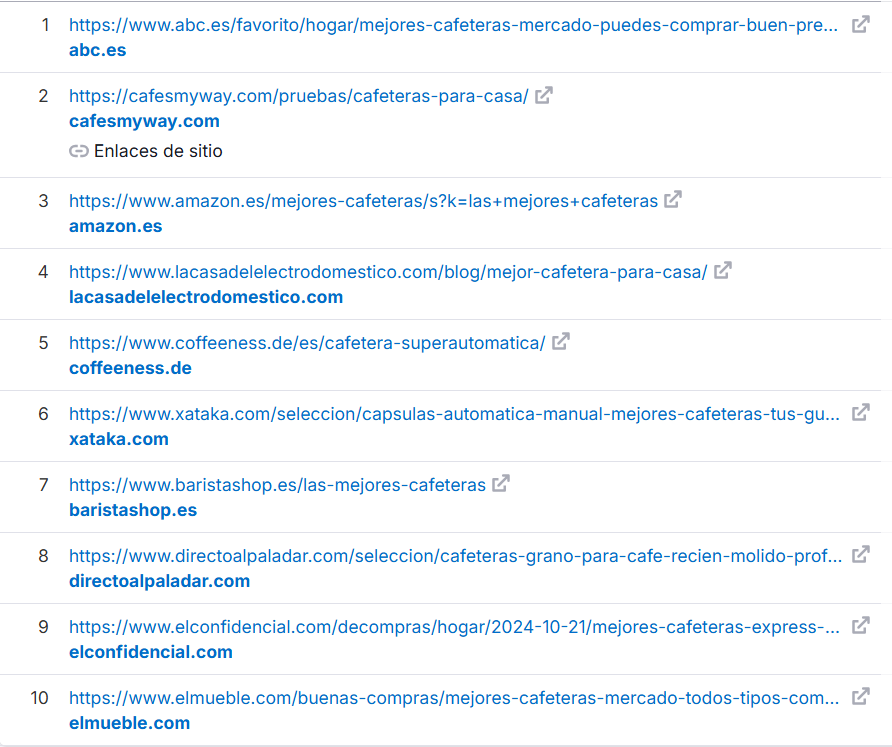
Before investing in links, manually review the top 10 positions on Google for your keyword. Look at the authority and links each page has and whether they appear in featured snippets, images or videos.
The key is to spot weak rival pages (few links) so you can overtake them quickly, without having to invest too much.
How to build links for affiliate websites?
Now, once we know which links we are interested in, we can start getting them. There are many more link building strategies for affiliates, but these are the ones that work best:
Entity stacking
The aim of “entity stacking” in SEO is to give your brand or website more trust and relevance, which helps it rank better in search engines. The term is associated with local SEO and “NAP” (Name, Address, Phone), but on affiliate sites the goal is not to rank in a specific city, but to compete in global, highly commercial SERPs (finance, crypto, supplements, gambling, etc.).
That is why the point is to create solid, consistent brand signals that build trust at an international level.
You can do this by following these steps:
Entity recognition:
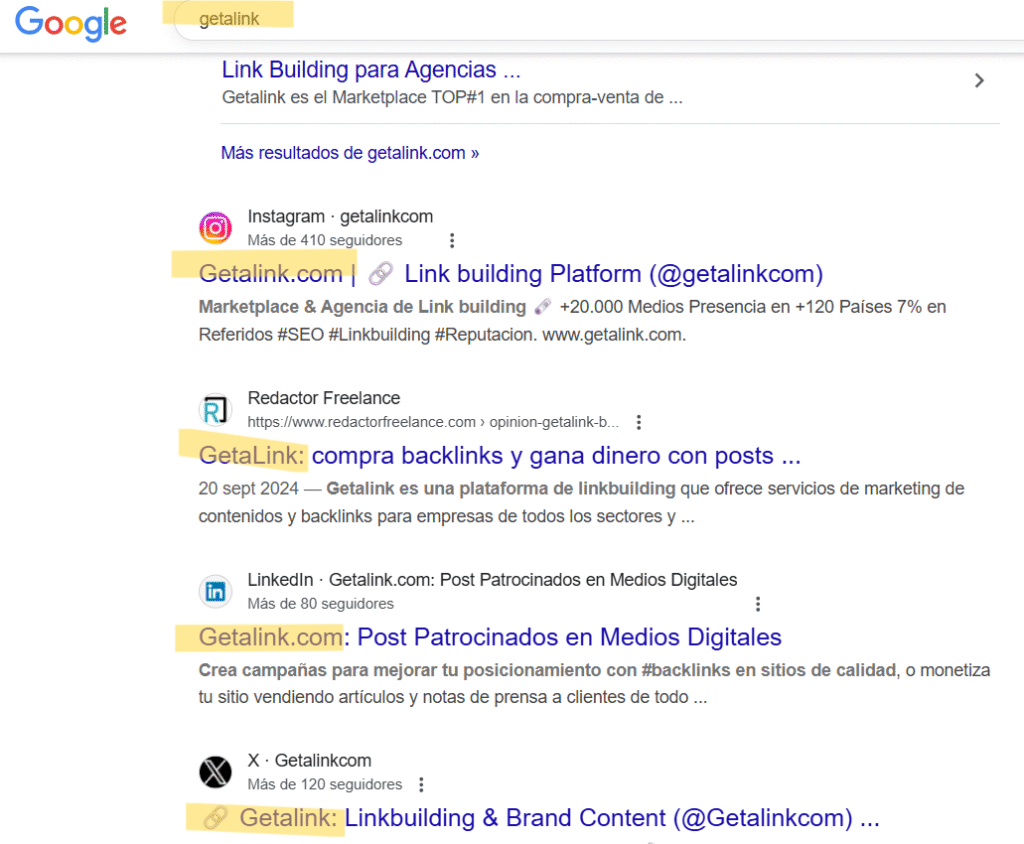
For Google to trust your website, you need your brand to be mentioned in reliable sources, such as social media profiles, reference sites, press releases and mentions in forums or communities. The key is to always keep the same information and identity elements (name, URL, logo, slogan) to reinforce the entity's consistency.
Layered stacking:
Once the base of mentions has been created, the next step is to interconnect them in layers. For example, you can link profiles and citations to your author pages, or point press releases to the homepage and key content, etc.
Structured data:
Link internally to pages such as “about me” and add the brand to the image alt attributes. This creates semantic consistency across your entire digital presence.
“Link bait” content to attract links
“Link bait content” is a strategy that attracts links naturally. It consists of creating linkable content, which increases Google's trust in your site and therefore boosts your affiliate pages and their ability to generate revenue.
The topics that work best are studies, statistics, lists, comparisons, tools or templates.
The content must be original and almost perfect, with FAQs, and you should add internal links to your commercial pages in the first paragraphs.
Try to match or outperform the competition in aspects such as text length, depth of heading structure, variety of semantic terms used and the inclusion of relevant images.
Share the content on forums, social networks, newsletters and through direct contact with journalists to give it wider reach.
Guest posts
Guest posts are articles published as a guest on other blogs in your niche in exchange for links. If you use expired domains with no traffic and pages that add no value, you are wasting time and money.
But when done strategically and with a focus on ROI, it is still one of the most effective link building strategies for affiliates.
The only guest posts worth it are those that combine high domain authority, genuine topical relevance and verifiable organic traffic. If the page gets no visits, its DR does not matter: that link will not help you.
Something else you should bear in mind is anchor text optimisation, because if you overdo it Google may penalise you. The ideal is:
- 50% Brand: linking with “[YourBrand].com”.
- 30% Partial match: natural variations of your main keyword “Best moka pot 2025”.
- 10% Generic: “click here”, “in this guide..”
The goal is to convey trust and topical relevance, not to saturate every link (anchor text) with exact-match keywords.
Extra tip: To reduce the risk of a penalty, link from the guest article to an informational page and from there to your commercial pages with optimised anchor text. This creates a more natural funnel that minimises potential risks.
Link insertions
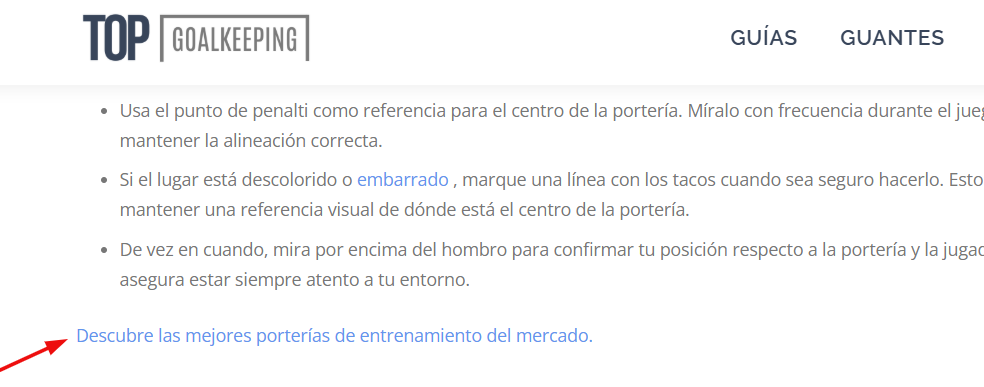
This strategy consists of inserting links into pages that are already published, indexed and authoritative. For affiliate websites, if done well, it is very powerful, because you do not have to wait for a new article to rank. To do it properly, follow these recommendations:
- Most link insertions fail because we only look at domain metrics. Make sure the URL where you are going to insert the link gets traffic, has been updated in the last three months and has internal links. Otherwise the insertion would not be worth it.
- Only insert links in content related to your topic.
- Track your links, with URL, date, anchor text used, traffic and progress at 30/60/90 days. That way you will know which insertions really work and you can scale what actually gets you results.
Buy quality backlinks for affiliate websites with Getalink
At Getalink we specialise in link building for affiliate websites. In highly competitive sectors such as casinos, gaming, sports betting and cryptocurrencies, it is not just about getting links, but about creating brand signals and building trust and genuine relevance at an international level.
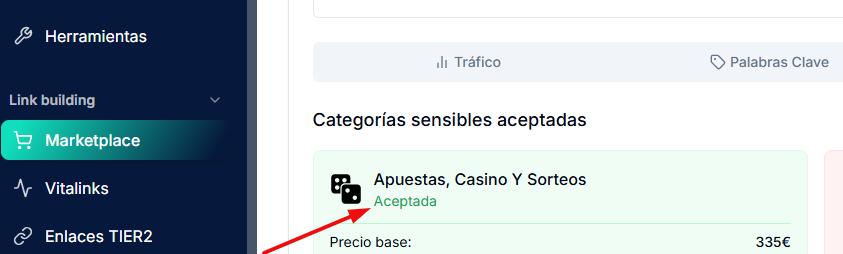
To do this, we offer a tailored strategy of niche media outlets, with a presence in more than 120 countries and languages, which is essential for these sectors, where many traditional link platforms do not operate.
If your goal is for your affiliate website to stand out in competitive sectors, trust Getalink and we will take care of increasing the visibility and authority your site needs.
Request a quote for your backlink strategy
Shall we talk about your project?
Tell us what you need (full name, email, website, message) and we'll get back to you within 24 hours.
SendOutsource your link building strategy for affiliates
If you have an affiliate website and lack the time or in-depth knowledge of link building, you can outsource your entire strategy to us.
At Getalink we offer a new managed link building service in which we take care of everything: researching media outlets, negotiating prices and designing a tailored strategy for your niche (casinos, betting, cryptocurrencies, etc.).
So don't waste time or resources: leave your growth in the hands of professionals.

Are affiliate SEO and link building dead because of AI?
Affiliate SEO is not dying, it is evolving. The key for the future is to use authority sites and work on entities to build trust…
AI does not replace strategy, but it does enhance it, as it helps create better content and optimise processes.
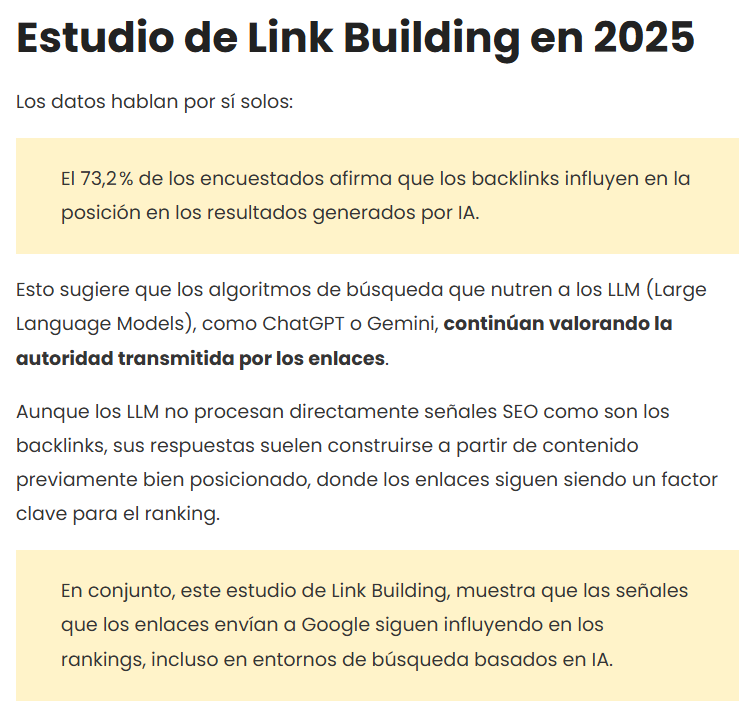
In 2025, the websites that will rank and become part of generative answers are those that build backlinks intelligently and adapt faster than the competition.
Example of a link building strategy for affiliates
Many affiliate projects fail because they do not follow a strategy: they buy one-off links hoping for a miracle. Here is an example you can implement for affiliate websites.
- The first step is to create tiers: comparison pages and reviews are tier 1; studies, statistics, tools and trends are tier 2; and supporting content and tutorials are tier 3. External links should point to tiers 2 and 3, which in turn channel authority towards tier 1. This adds naturalness and improves topical relevance.
- For example, you can build 3 to 5 links to the main pages that generate the most business for you. Complement this with 20 supporting articles to work on internal linking and 15-20 quality links (guest posts, insertions and link bait).
- Track the links you build, the anchor text, the publication velocity, etc., so you can make decisions based on results.
Frequently asked questions about link building for affiliate websites
What is link building for affiliates?
It is the creation of links to a website to increase its authority, improve its Google rankings and generate more commissions.
Where should I place the first links?
On pages with commercial intent that are already close to Google's top 10, because they are the ones that can generate revenue the fastest.
What type of links work best?
Quality guest posts, link insertions on pages with traffic and “link bait” content that attracts natural links.
Is buying links risky?
It depends. If you choose relevant sites with real traffic and use a varied anchor text strategy, the risk is reduced.